
Ducted System Repairs · Nambucca Heads
Aged care facility ducted repair work at Nambucca Heads carries compliance urgency that residential repairs do not — climate control in resident and clinical-adjacent spaces has to be restored to reliable operation quickly, and FHC coordinates directly with facility management on temporary mitigation while the permanent fix is scheduled.
Ducted system repairs across Nambucca Heads
The Nambucca Heads ducted repair base includes both residential installations across the town's foreshore and set-back streets, and aged care facility installations where reliability matters more than at any other residential-scale service pattern. Facility repairs follow the same structured diagnostic sequence — controller, zone motors, plant, refrigerant — but with facility management coordination on access windows and any interim arrangements needed for affected spaces.
Residential ducted repair patterns split by position. V-Wall side and Riverside Drive foreshore installations show the combined salt-and-estuary fault pattern with outdoor plant wear and drain-line issues. Installations set back from the river mouth show more standard age-driven patterns. FHC quotes every Nambucca Heads ducted repair in writing before work commences and provides repair-versus-replace figures on systems past ten years old with major-component failure.
What FHC delivers on every ducted system repairs
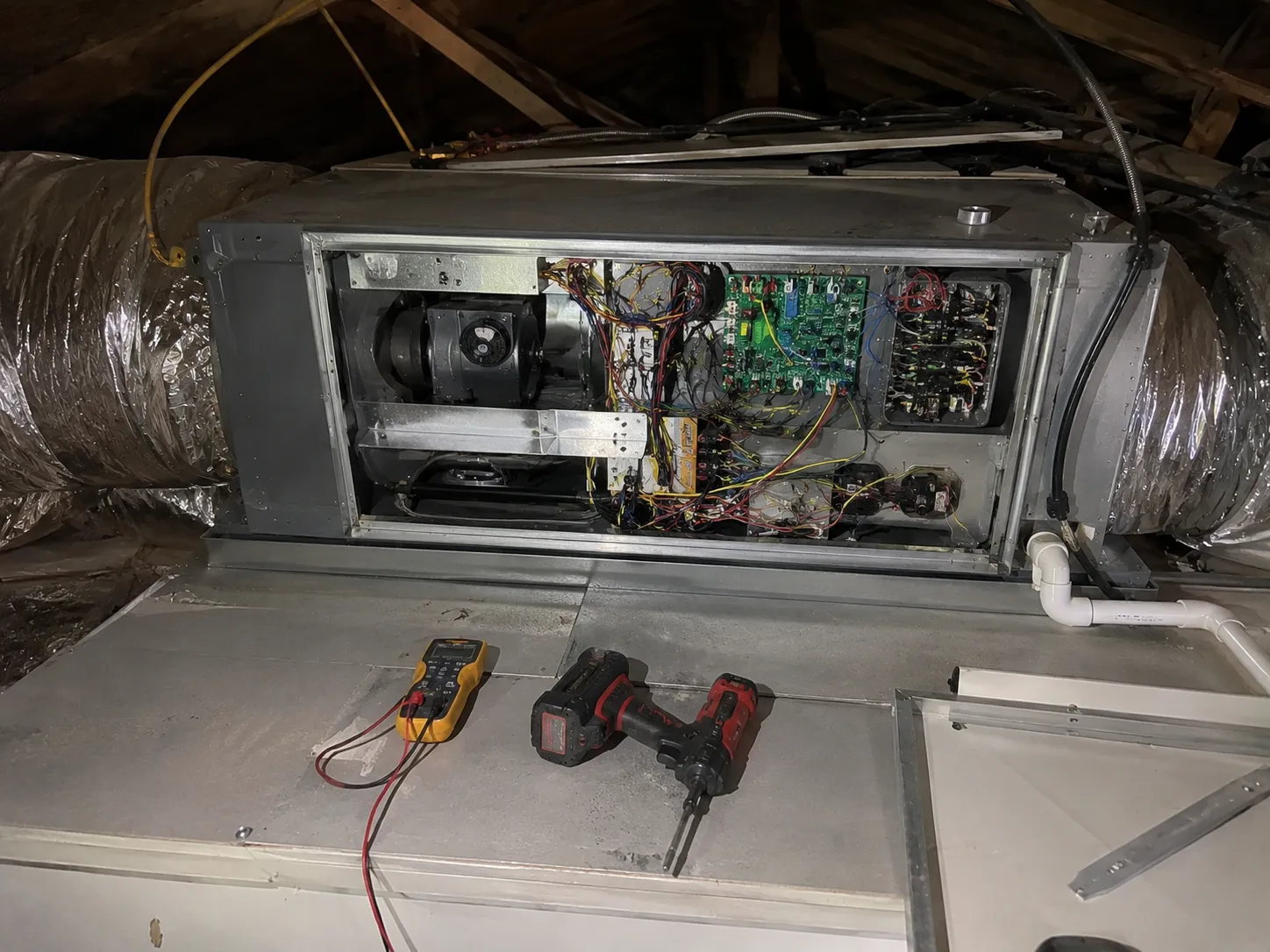
Ducted system repair work covers a wider fault surface than split-system repairs because the system has more components — controller, zone motors, ductwork and registers, indoor plant, outdoor condenser, refrigerant circuit, electrical circuit. FHC diagnoses ducted faults in a structured order: start with the controller (settings, zone commands, error codes), then move outward to zone motors (physical actuation, damper response), then the indoor plant (filter, coil, drain, fan), then the outdoor condenser, then the refrigerant circuit. This sequence catches the most common failures fast without wasting time on components that were never at fault.
The most common ducted fault categories are zone motor failures (seized or unresponsive damper motors producing uneven room airflow), controller and PCB failures (control-board decay, error-code lockouts, communication faults between controller and plant), refrigerant circuit issues (leaks, incorrect charge, blocked lines), and ductwork or register issues (crushed flex duct, disconnected joints, blocked returns). Different fault categories require completely different diagnostic tools and repair approaches, so identifying the right category first matters.
FHC quotes every ducted repair in writing before work commences. On systems past ten years old with a major-component failure, FHC provides both a repair figure and a comparable replacement figure so the decision to repair or replace is data-driven rather than reactive. All refrigerant work is completed by ARCtick-licensed technicians (RTA AU069269). A 12-month workmanship warranty applies to the repair work where conditions apply.
Why FHC Refrigeration for ducted system repairs
- • ARCtick licence AU069269 — refrigerant faults on ducted systems diagnosed and repaired legally
- • Structured diagnostic sequence — controller, zone motors, plant, refrigerant — no wasted time on components not at fault
- • Written quote before any repair commences; honest repair-vs-replace comparison on aging ducted systems
Frequently asked
Does FHC prioritise aged care facility ducted repairs at Nambucca Heads?
Yes. Facility ducted failures affecting resident and clinical-adjacent spaces are prioritised for response, and FHC coordinates with facility management on temporary mitigation (portable systems, alternative-space arrangements) while the permanent fix is scheduled. Written diagnosis and quote provided before repair work commences.
What causes intermittent Nambucca Heads ducted faults?
On combined-environment installations near the river mouth, intermittent electrical faults often trace back to control-board terminal corrosion driven by combined salt-air and estuary humidity — connections that work when dry and fail when the humidity load is high. These faults are notoriously hard to diagnose without physical inspection because they do not reproduce on demand, and behaviour-first diagnostic discipline matters here as much as anywhere.