
Ducted System Repairs · Toormina
Ducted repair patterns on the older Toormina family-home stock skew toward age-driven component failures rather than the salt-corrosion-driven wear that dominates coastal-band installations. FHC applies the structured diagnostic sequence — controller, zone motors, plant, refrigerant — to every Toormina call, and provides an honest repair-versus-replace comparison on aging systems.
Ducted system repairs across Toormina
The Toormina ducted repair base is dominated by retrofits into older family homes. Fault patterns reflect the age and retrofit constraints: zone motor failures on installations with longer runtime, older controller PCB failures on units past their design life, and drain-line issues on retrofits where drain routing was constrained by the existing structure. The inland position means outdoor-unit salt-corrosion failures are less common than on coastal-band installations further east.
FHC quotes every Toormina ducted repair in writing before work commences. On systems past ten years old, honest repair-versus-replace conversations come up more frequently on Toormina installations than on newer estate systems elsewhere — the older family-home stock has often been in service long enough that individual repairs would not meaningfully extend equipment life. Both figures are provided so the decision is data-driven.
What FHC delivers on every ducted system repairs
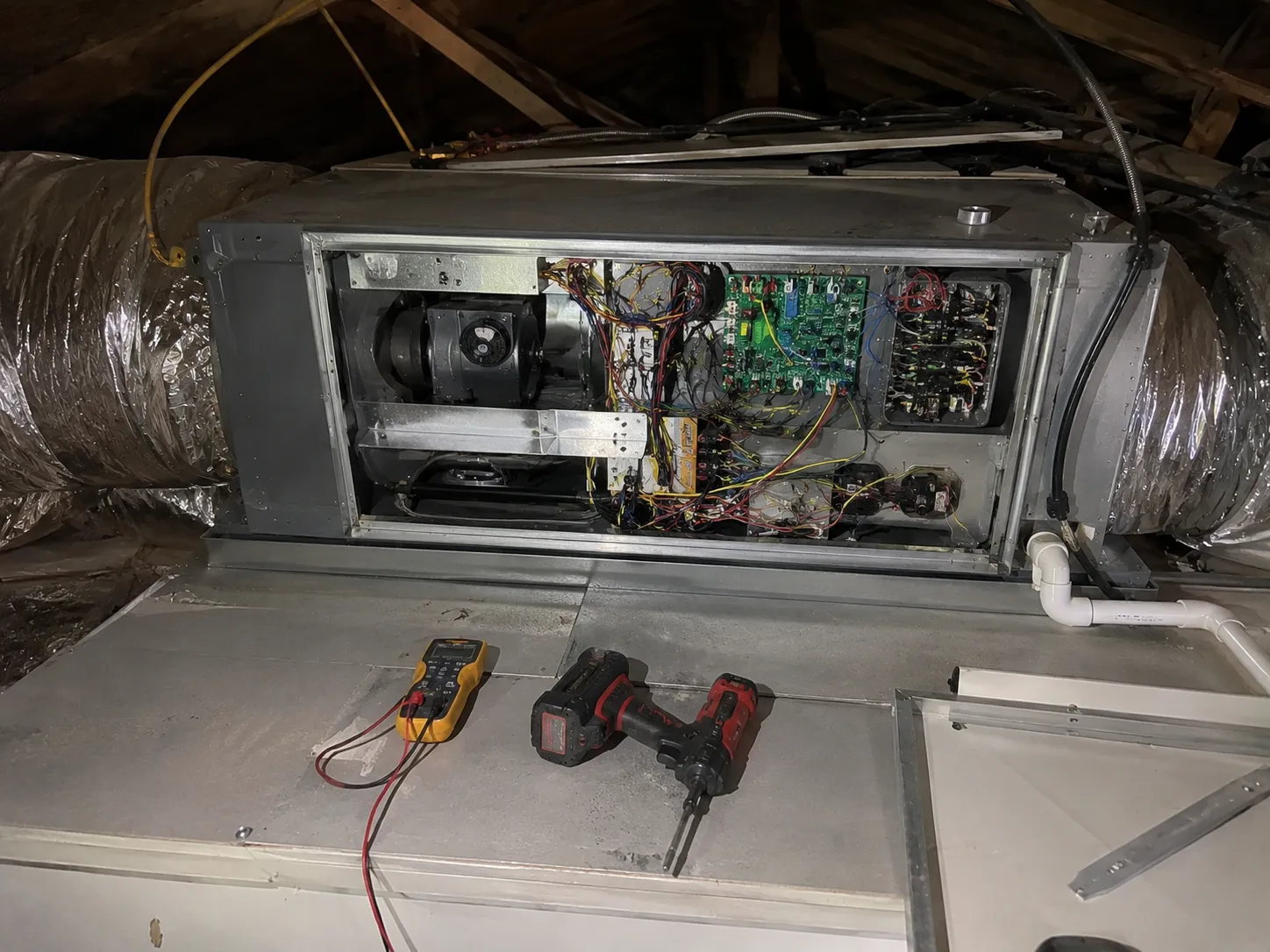
Ducted system repair work covers a wider fault surface than split-system repairs because the system has more components — controller, zone motors, ductwork and registers, indoor plant, outdoor condenser, refrigerant circuit, electrical circuit. FHC diagnoses ducted faults in a structured order: start with the controller (settings, zone commands, error codes), then move outward to zone motors (physical actuation, damper response), then the indoor plant (filter, coil, drain, fan), then the outdoor condenser, then the refrigerant circuit. This sequence catches the most common failures fast without wasting time on components that were never at fault.
The most common ducted fault categories are zone motor failures (seized or unresponsive damper motors producing uneven room airflow), controller and PCB failures (control-board decay, error-code lockouts, communication faults between controller and plant), refrigerant circuit issues (leaks, incorrect charge, blocked lines), and ductwork or register issues (crushed flex duct, disconnected joints, blocked returns). Different fault categories require completely different diagnostic tools and repair approaches, so identifying the right category first matters.
FHC quotes every ducted repair in writing before work commences. On systems past ten years old with a major-component failure, FHC provides both a repair figure and a comparable replacement figure so the decision to repair or replace is data-driven rather than reactive. All refrigerant work is completed by ARCtick-licensed technicians (RTA AU069269). A 12-month workmanship warranty applies to the repair work where conditions apply.
Why FHC Refrigeration for ducted system repairs
- • ARCtick licence AU069269 — refrigerant faults on ducted systems diagnosed and repaired legally
- • Structured diagnostic sequence — controller, zone motors, plant, refrigerant — no wasted time on components not at fault
- • Written quote before any repair commences; honest repair-vs-replace comparison on aging ducted systems
Frequently asked
What ducted faults come up most often on Toormina installations?
Age-driven component failures — zone motors, controllers, PCBs, drain-line issues on older retrofits. The salt-corrosion-driven outdoor-unit wear that dominates coastal-band repairs is largely absent here because Toormina sits inland enough to miss the direct sea breeze.
When does FHC recommend replacing rather than repairing a Toormina ducted system?
On systems past ten years old with a major-component failure, FHC provides both a repair figure and a replacement figure. Where the system has already had multiple age-driven repairs or where the presenting fault is one where the accumulated ongoing wear makes further repairs a rolling cost, replacement is often the honest recommendation.