
Refrigerant Leak Detection & Repair · Moonee Beach
The behaviour-first diagnostic sequence matters more on Moonee Beach installations than at most other coastal-band positions — the Moonee Creek estuary produces persistent humidity that drives drain-line and condensate handling problems that can look identical to refrigerant leaks on the presenting symptoms. Test behaviour, then decide. All refrigerant work completed under ARCtick licence AU069269.
Refrigerant leak detection on Moonee Beach installations
Foreshore Moonee Beach installations show a combined fault environment — direct salt-air corrosion driving the standard coastal-band leak pattern (fan motor bearings, condenser fins, PCB tracks) plus estuary humidity driving drain-line and condensate issues that mimic refrigerant faults. FHC's disciplined test-behaviour-first approach separates the two categories before any refrigerant testing happens, which prevents the customer paying for the wrong fix on what turns out to be a drainage repair.
The Moonee Beach secondary commercial centre — small hospitality, shopfront food retail, beverage tenants — carries the standard trading-hours refrigeration-leak urgency where downtime creates both revenue impact and food-safety pressure. Business-hours call-out is $132 AUD including the first hour of labour; parts, refrigerant, freight and additional labour are separate. A straightforward leak detection and repair is around 2 hours.
What FHC delivers on every refrigerant leak detection & repair
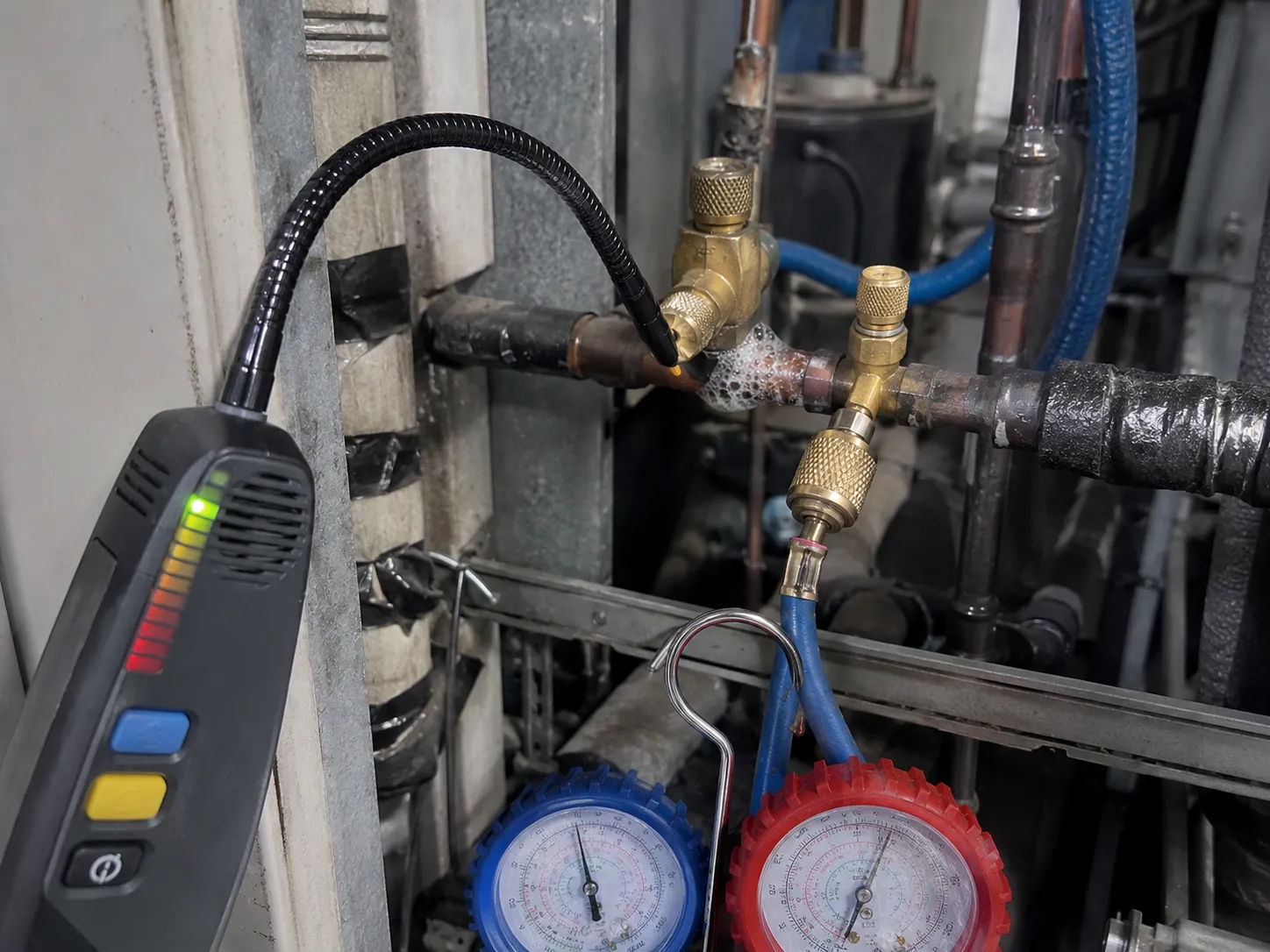
Refrigerant leak detection and repair is the service where diagnostic discipline matters most. Reduced heating or cooling performance is easy to blame on low refrigerant, but the actual cause is often something else: blocked filters, dirty coils, poor airflow, failed fans, faulty PCBs, zone-control problems, room-condition issues, or other electrical and mechanical faults. FHC tests the actual behaviour of the system first and only pursues a refrigerant diagnosis where the symptoms genuinely point there.
When a real leak is present, the process is: initial diagnosis, leak-testing, locating the leak where possible, repair of the leak where approved and accessible, pressure testing, correct refrigerant recharge, and final operational testing. A common customer misconception is that leaking refrigerant will have a strong or obvious smell — it does not, which is why proper testing is required rather than a nose-based check. Small or intermittent leaks, concealed or difficult-to-access leak locations, and extensive isolation testing can all extend job length considerably beyond the roughly 2-hour turnaround a straightforward leak-and-repair takes.
FHC holds an ARCtick licence (AU069269) covering all refrigerant handling, an air-conditioning and refrigeration licence, and $5 million public liability insurance. Business-hours call-out is $132 including the first hour of labour; additional labour, refrigerant, parts and repair materials are charged separately. A 12-month workmanship warranty applies where conditions apply. Refrigerant work performed by non-certified personnel is illegal in Australia — every FHC leak repair is completed within legal certification requirements.
Why FHC Refrigeration for refrigerant leak detection & repair
- • ARCtick licence AU069269 — refrigerant work by non-certified personnel is illegal in Australia
- • Behaviour-first diagnostic — reduced performance has many causes, not always low refrigerant
- • Written quote before work; business-hours call-out $132 AUD including first hour of labour
Frequently asked
Is reduced Moonee Beach aircon performance always a refrigerant issue?
No, and this is worth checking properly rather than assuming. Moonee Beach foreshore installations show both direct salt-air corrosion faults and estuary-humidity drainage issues that can present as refrigerant problems but are not. Blocked filters, dirty coils, drain-line problems, failed fans and control-board issues all reduce performance and are checked first.
What causes refrigerant leaks on Moonee Beach commercial refrigeration?
Coastal salt-air condenser corrosion is the dominant cause on outdoor equipment, with estuary humidity accelerating terminal corrosion on electrical components. Mechanical fatigue on aging refrigerant-circuit connections adds a further category. FHC quotes leak detection and repair in writing before work commences.