
Refrigerant Leak Detection & Repair · Sawtell
Refrigerant leaks on Sawtell installations are usually the terminal stage of a longer story — salt-air condenser fin oxidation opening pinholes on U-bends, control-board terminal corrosion opening electrical-adjacent leaks, mechanical fatigue on refrigerant-circuit joints. FHC diagnoses behaviour first, tests refrigerant only where symptoms point there, and repairs under ARCtick licence AU069269.
Refrigerant leak detection on Sawtell coastal-band systems
What makes Sawtell leak detection distinct from inland positions is the higher probability that a genuine leak is the actual cause. The coastal-band position drives faster fin oxidation and connector corrosion than inland systems see, and refrigerant leaks come up regularly on aging installations. Even so, the behaviour-first sequence matters — blocked filters, drainage issues or control-board failures can present as low refrigerant and lead to the wrong repair if diagnosis is skipped.
First Avenue commercial refrigeration leak work is prioritised during trading hours where a leak is stopping trade or creating food-safety pressure. Business-hours call-out is $132 AUD including the first hour of labour; a straightforward leak detection and repair is around 2 hours, but concealed or intermittent leaks on aging equipment where corrosion has affected multiple components can take considerably longer to isolate.
What FHC delivers on every refrigerant leak detection & repair
Refrigerant leak detection and repair is the service where diagnostic discipline matters most. Reduced heating or cooling performance is easy to blame on low refrigerant, but the actual cause is often something else: blocked filters, dirty coils, poor airflow, failed fans, faulty PCBs, zone-control problems, room-condition issues, or other electrical and mechanical faults. FHC tests the actual behaviour of the system first and only pursues a refrigerant diagnosis where the symptoms genuinely point there.
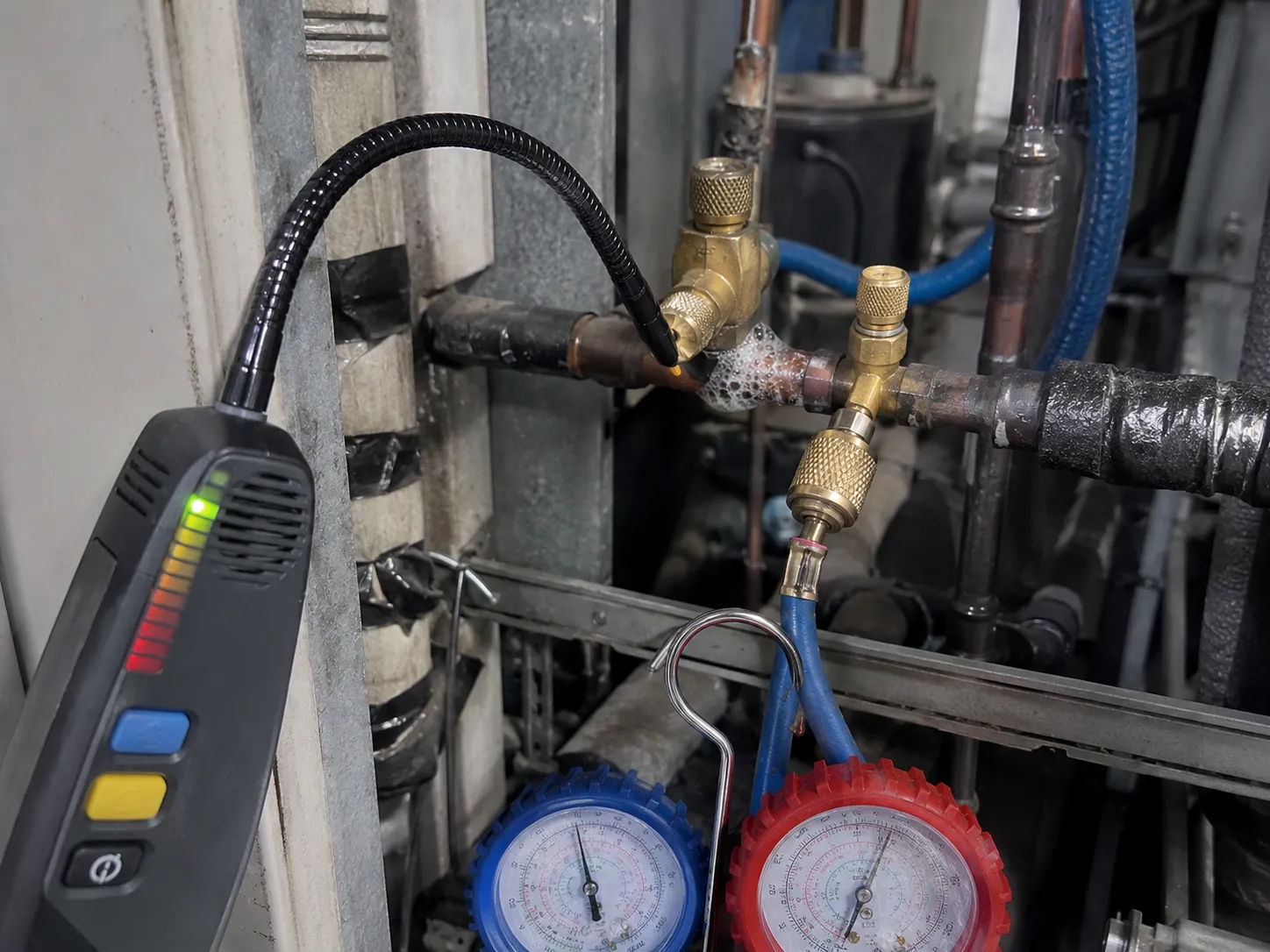
When a real leak is present, the process is: initial diagnosis, leak-testing, locating the leak where possible, repair of the leak where approved and accessible, pressure testing, correct refrigerant recharge, and final operational testing. A common customer misconception is that leaking refrigerant will have a strong or obvious smell — it does not, which is why proper testing is required rather than a nose-based check. Small or intermittent leaks, concealed or difficult-to-access leak locations, and extensive isolation testing can all extend job length considerably beyond the roughly 2-hour turnaround a straightforward leak-and-repair takes.
FHC holds an ARCtick licence (AU069269) covering all refrigerant handling, an air-conditioning and refrigeration licence, and $5 million public liability insurance. Business-hours call-out is $132 including the first hour of labour; additional labour, refrigerant, parts and repair materials are charged separately. A 12-month workmanship warranty applies where conditions apply. Refrigerant work performed by non-certified personnel is illegal in Australia — every FHC leak repair is completed within legal certification requirements.
Why FHC Refrigeration for refrigerant leak detection & repair
- • ARCtick licence AU069269 — refrigerant work by non-certified personnel is illegal in Australia
- • Behaviour-first diagnostic — reduced performance has many causes, not always low refrigerant
- • Written quote before work; business-hours call-out $132 AUD including first hour of labour
Frequently asked
How long does refrigerant leak detection take on a Sawtell coastal-band installation?
A straightforward leak detection and repair is roughly 2 hours. Concealed, intermittent, small or difficult-to-access leaks — which come up regularly on aging coastal-band installations where corrosion has affected multiple components — can take considerably longer to isolate. FHC gives an honest estimate on the phone after understanding the presenting symptoms.
What causes refrigerant leaks on Sawtell aircon systems?
Most Sawtell leaks trace back to salt-air-driven corrosion on outdoor units — condenser coil fin oxidation opening pinholes on U-bends, control-board terminal corrosion opening electrical-adjacent leaks, or mechanical fatigue on older systems where flare connections and joints have deteriorated. Preventative servicing on scheduled intervals stays ahead of these faults better than reactive-only servicing.