


An air conditioner leaking water is one of the most common calls a technician gets, and it looks more alarming than it usually is. In the overwhelming majority of cases, it's a drainage problem rather than the refrigerant scenario people sometimes worry about. Here's what's actually causing it, what's safe to check yourself, and when it's worth picking up the phone rather than reaching for a towel and hoping it stops.
Why Is My Air Conditioner Leaking Water?
Almost every leak we attend comes down to one of two things: a blocked drain, or a damaged or aged part. Everything else is a variation on those.
Blocked drains are the more common of the two, and lack of maintenance is the usual reason. Over time the drain fills with slime and debris until water has nowhere to go but out. It is not always debris from inside the system either. Frogs, spiders and other animals or objects get into the drain from outside and lodge there, restricting the flow or blocking it completely.
Damaged parts are the second cause, and that is either age or rodents. Insulation and drain piping get chewed out surprisingly often, and where that happens the water does not necessarily appear where you would expect it.
Which of the two you are dealing with is not something to guess at from the outside. It needs looking at before anyone can tell you what is actually going on.
Why Do Leaks Show Up at the Start of Summer?
Leak calls do spike in summer, and the reason is less about the heat than about what happened during the months before it.
Most systems get used far more in summer than in winter, so through the cooler months they produce little condensate and sit largely idle. Whatever worked its way into the drain while the system was sitting stays there. Then the first hot week arrives, the system runs properly for the first time in months, and the blockage announces itself as water down the wall.
That is also when the frogs and spiders turn up in the story. They get into a drain that has not had water running through it, and nobody finds out until the system is switched back on.
How Does the Condensate Drain System Actually Work?
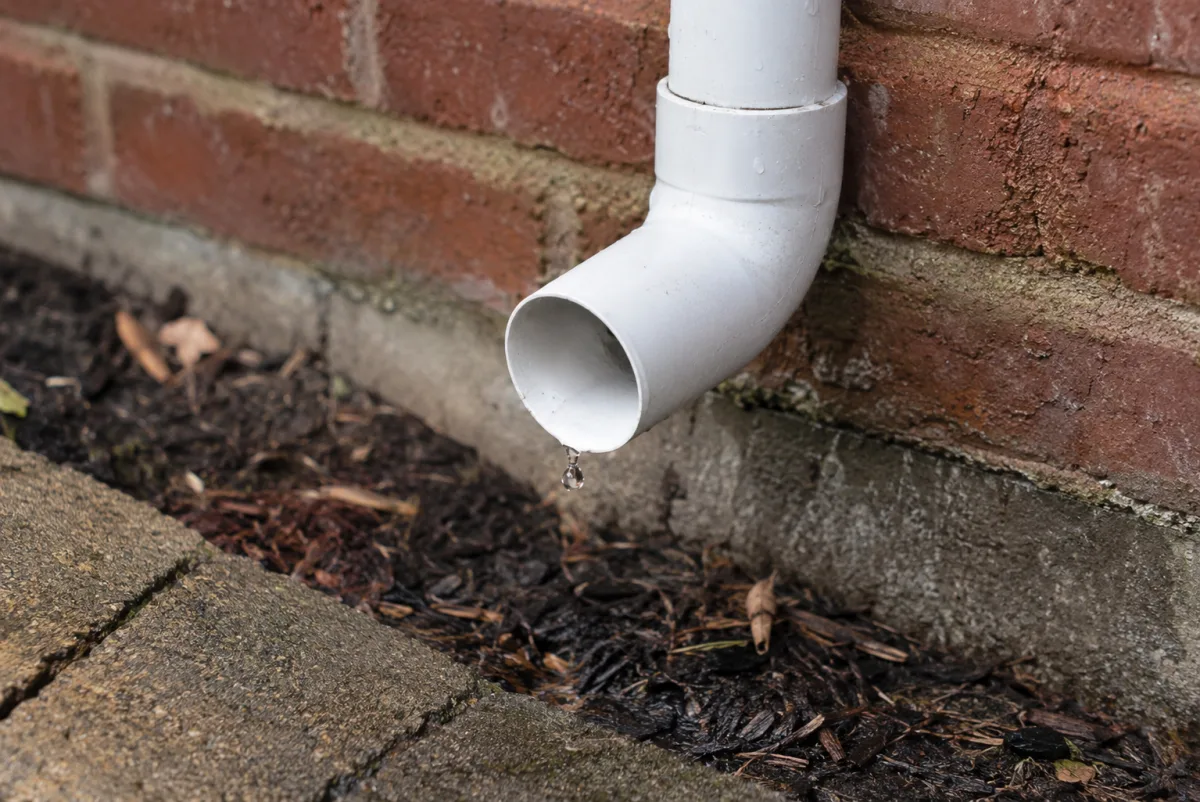
Every split or ducted air conditioner has an evaporator coil that gets cold enough to condense moisture out of the air passing over it, the same way a cold glass of water sweats on a humid day. That condensation drips into a drain pan sitting beneath the coil, then runs out through a drain line, a narrow pipe that carries it away from the unit and out of the house.
When everything's working, you never see or think about any of this. It's only when something in that chain breaks down, the pan, the pipe, or what's feeding into it, that water starts turning up somewhere it shouldn't.
What Are the Most Common Causes of a Water Leak?
Blocked Drains
Blocked drains are the more common of the two, and lack of maintenance is the usual reason. Over time the drain line fills with slime, dust and general debris until water has nowhere to go but out. It's usually sitting right at the visible end of the pipe outside.
It's not always debris from inside the system, either. Frogs, spiders and other animals or objects get into the drain from outside and lodge there, restricting the flow or blocking it completely.
Damaged or Aged Parts
Age or damage to the parts that carry water away from the coil is the second cause. Rodents are a common source: insulation and drain piping get chewed through in roof spaces surprisingly often, and where that happens the water does not necessarily appear where you would expect it.
Drain pans do wear out over time, particularly in older systems or coastal conditions, where salt air accelerates corrosion on metal components generally. The indoor unit no longer sitting level is a related issue on older installations or where a unit has been knocked or adjusted, since drainage depends on gravity.
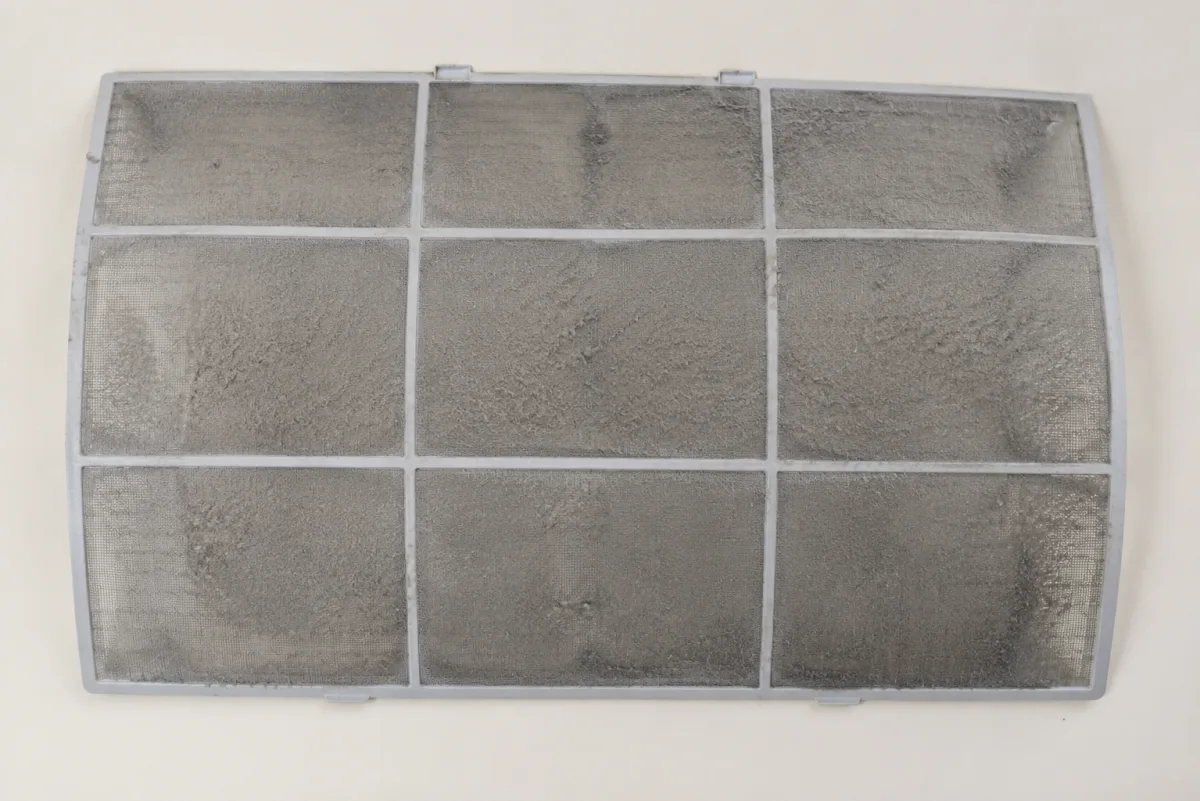
Airflow faults sit here too. A dirty filter starves the evaporator coil of airflow, and the coil can ice over as a result. Once the system stops running and the ice melts, more water lands in the pan than it's designed to handle at once. Low refrigerant has the same effect for a different reason: the coil runs too cold and ices over, with the same overflow when it thaws. Low refrigerant specifically needs a licensed technician to confirm and correct, it's not something to top up yourself.
If your filter hasn't had attention in a while, that's worth ruling out first since it's the easiest one to actually see for yourself. A chemical bag clean covers the filter, coil, and drain in one visit if it's overdue.
Can a Leak Be Happening Inside the Wall?
Yes, and that is the version worth catching early. Where rodents have chewed through drain piping or insulation, water can end up running inside the wall cavity rather than down the front of the unit where you would see it.
A leak you can see is a nuisance. A leak you cannot see is doing the same thing to plaster, framing and insulation with nothing to alert you to it. That is one of the reasons a proper maintenance schedule matters more than it looks like it should: the checks that catch a compromised drain line are the same ones that catch it before the damage is somewhere expensive.
If you have had rodent activity in the roof space, or the system is leaking without any visible water at the indoor unit, it is worth having someone look properly rather than waiting to see what appears.
Can I Keep Running It While It's Leaking?
If water is anywhere near power outlets, light fittings, or other electrical components, turn the system off and isolate power at the switchboard before doing anything else. Water and electrical components don't mix, and that's not a risk worth waiting on.
If it's just dripping onto a floor away from anything electrical, it's usually not an emergency. That said, it's not something to leave running indefinitely either, the underlying cause won't resolve itself, and every hour it keeps leaking is more water damage to whatever's underneath it. Somewhere between "immediate emergency" and "ignore it" is the honest answer: switch it off if you're not sure, and get it looked at reasonably soon either way.
Where the water's coming from matters too. A small amount of dripping from the outdoor unit's drain outlet during a hot, humid stretch is generally normal system operation, that's condensate doing exactly what it's supposed to do. Water appearing indoors, around the wall-mounted unit or coming through the ceiling, is the version that actually needs attention.
Is It a Water Leak or a Refrigerant Leak?
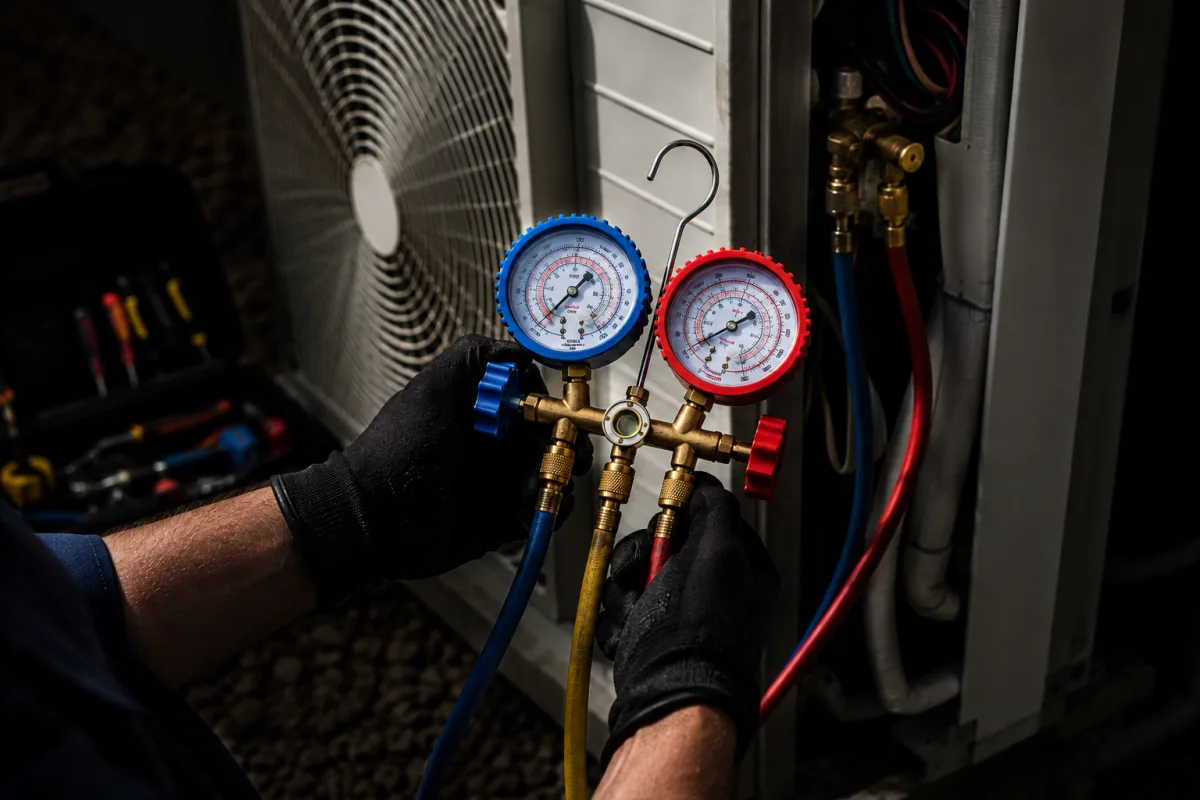
If what's dripping is clear, odourless, and pooling the way water does, you're dealing with a drainage issue. Refrigerant runs in a sealed loop and isn't meant to leak at all under normal operation, so if refrigerant is escaping, something in the system has actually failed, a fitting, a coil, or a line.
This distinction matters because the two aren't handled the same way. Refrigerant is a controlled substance, and by law, anyone servicing, installing, or maintaining equipment that handles it needs to hold a current Refrigerant Handling Licence issued by the Australian Refrigeration Council. That's not a technicality, it's the reason a refrigerant leak isn't something to investigate yourself the way you might check a drain outlet. If you're genuinely unsure which one you're looking at, particularly if cooling performance has dropped off alongside the leak or there's ice forming on the pipework, that uncertainty is itself a reason to get a technician to look rather than guess.
Why You Shouldn't Ignore a Leak
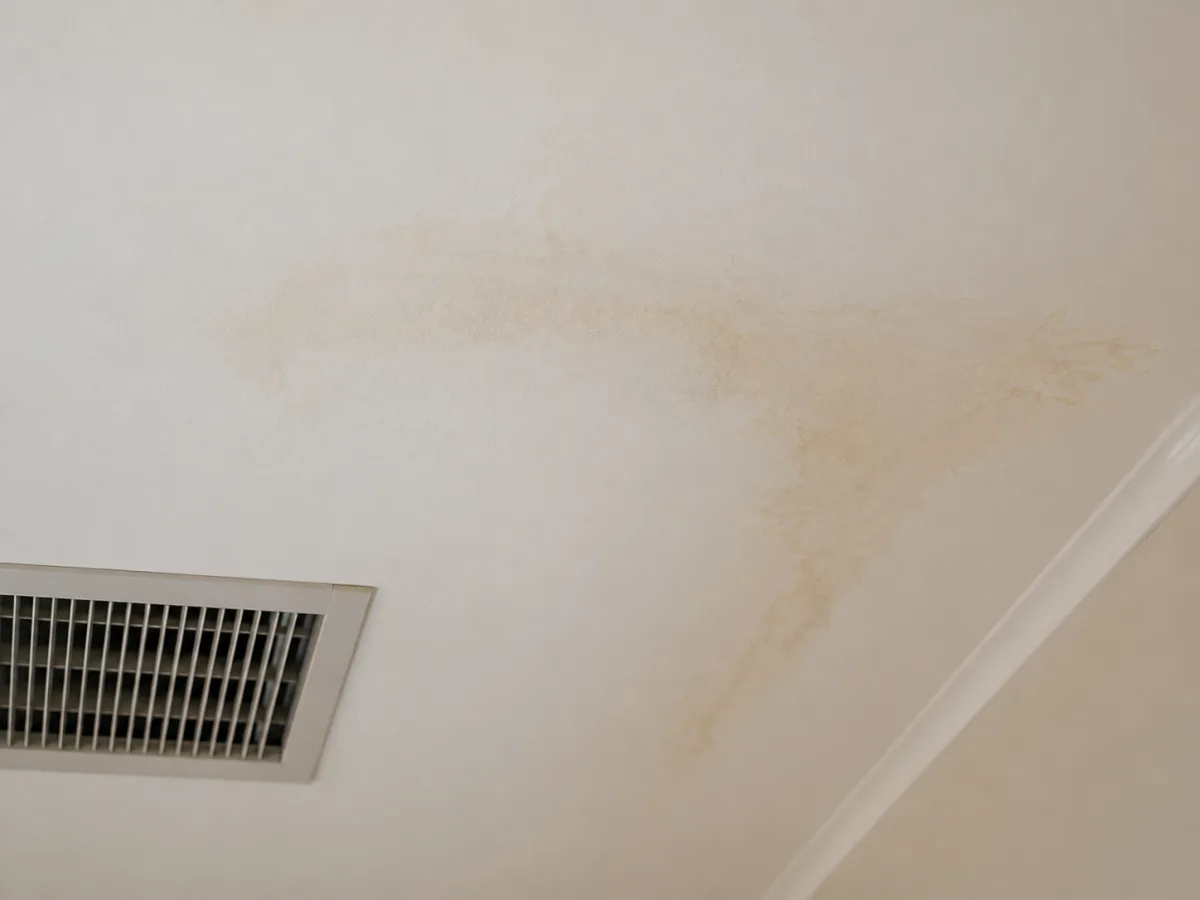
An ongoing leak doesn't just risk the air conditioner, it risks whatever it's landing on. Timber floors, plasterboard ceilings, and skirting boards all absorb water, and once they do, you're often looking at repair costs well beyond what fixing the original leak would have cost.
Mould grows indoors wherever there is too much moisture, and it can worsen asthma and allergies. Effects vary between people, from a runny or blocked nose and eye irritation through to wheezing and asthma attacks. NSW Health guidance is that water damaged materials should be dried and cleaned within 48 hours to prevent mould taking hold, which is why a leak is not something to leave until the weekend.
Keeping up with regular maintenance catches most of the common causes, a blocked line or a dirty filter, before they turn into a leak in the first place.
What Can You Check Yourself?
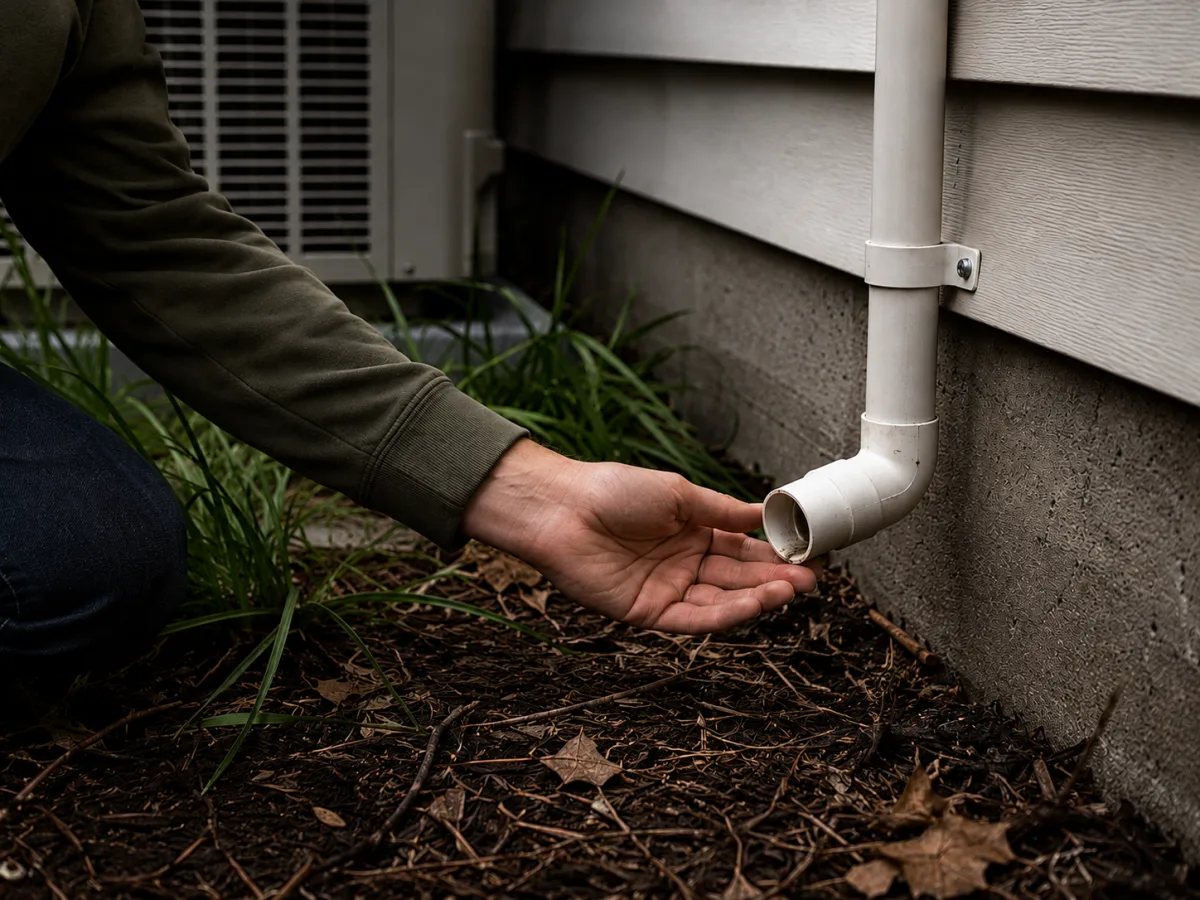
A few basic checks are fair game before calling anyone:
- The visible external end of the drain line, usually a small pipe near the outdoor unit, for obvious blockages, leaves, or debris sitting right at the outlet.
- The filter, since a dirty one is one of the most common contributors and one of the easiest to see for yourself.
- Whether the indoor unit looks level, particularly if it's a newer installation.
Some of this you can stay on top of yourself at home. Keeping filters clean, keeping the area around the outdoor unit clear, and noticing early when water appears where it should not are all worth doing between professional visits. The parts involving refrigerant, electrical components or opening the system up are not.
What Does a Repair Actually Involve?
A recent call gives the shape of it. The customer's air conditioner was leaking down the wall and onto the floor. The system had gone a long time without maintenance, and earlier attempts at the problem had not resolved what was causing it, so the drain had filled with slime and foreign debris.
We cleared the drain and emptied the drip tray, then serviced the unit with a chemical bag clean so the contaminants were actually removed from the indoor unit rather than just pushed along: mould, dust, grime and slime. Once that was done the unit went back together, was switched on and tested. It was no longer leaking, and the air coming off it was clean.
That sequence matters. Clearing a blocked drain stops the water, but if the reason the drain blocked is still sitting on the coil and in the fan barrel, you are back in the same place before long.
When Should You Call a Technician?
If the basic checks don't fix it, if cooling performance has dropped off alongside the leak, or if you're genuinely not sure whether it's water or refrigerant, that's the point to book an aircon repair rather than keep troubleshooting. Request a quote and we'll get a proper diagnosis rather than a guess.