

The Short Version
- The Daikin U4 fault code means the indoor and outdoor units have stopped talking to each other. It is a communication fault, not a refrigerant problem.
- Most overseas guides point you at the wiring first. On the Mid North Coast, the outdoor PCB is the more common finding.
- Geckos, lizards and ants get into outdoor units regularly here. If one bridges contacts across a board, it shorts and takes components with it.
- U4 is not a homeowner repair. It sits behind covers on live terminals and control boards.
- Parts are usually available. Most outdoor boards come up from Sydney in 2 to 3 days, sometimes less than a week depending on the unit.
In This Guide
What Does The U4 Fault Code Mean On A Daikin?
U4 means the indoor unit and the outdoor unit have lost communication with each other.
Daikin systems are inverter driven, so the two halves of the system need to exchange data constantly to run. Temperature readings go one way, compressor demands go the other. When that link drops out, the system shuts down rather than running blind.
The useful thing to know before you ring anyone is what U4 is not. It is not a refrigerant fault, and it does not mean the compressor has failed. The cause is electrical, and it sits somewhere between the two units or on one of the control boards.
That matters because reduced cooling gets blamed on low gas more often than it should. A U4 rules that out from the start.
How Do You Read A Daikin Fault Code?
On a hand held remote, hold the cancel button down for around 10 seconds until a two character code appears, then press cancel again to cycle through. Stop when you hear a longer beep. That is your fault code.
On a wall controller the code displays on its own without any input.
Write it down before you ring. Knowing the system is throwing U4 rather than something else changes what a technician brings to site, and it can be the difference between a diagnosis and a diagnosis plus a return visit.
What Usually Causes A U4 Around Coffs Harbour?
In Clayton's experience across the Mid North Coast, the outdoor PCB has usually failed.
That is worth flagging, because most of what you will find searching this code points somewhere else. Overseas troubleshooting guides and supply documentation start with the transmission wiring, loose terminals and power supply, and they are not wrong. On a new install or a system that has just been worked on, wiring is the first thing to rule out. Technical guidance from suppliers has you checking the outdoor unit supply sits between 187 and 253 VAC before going any further.
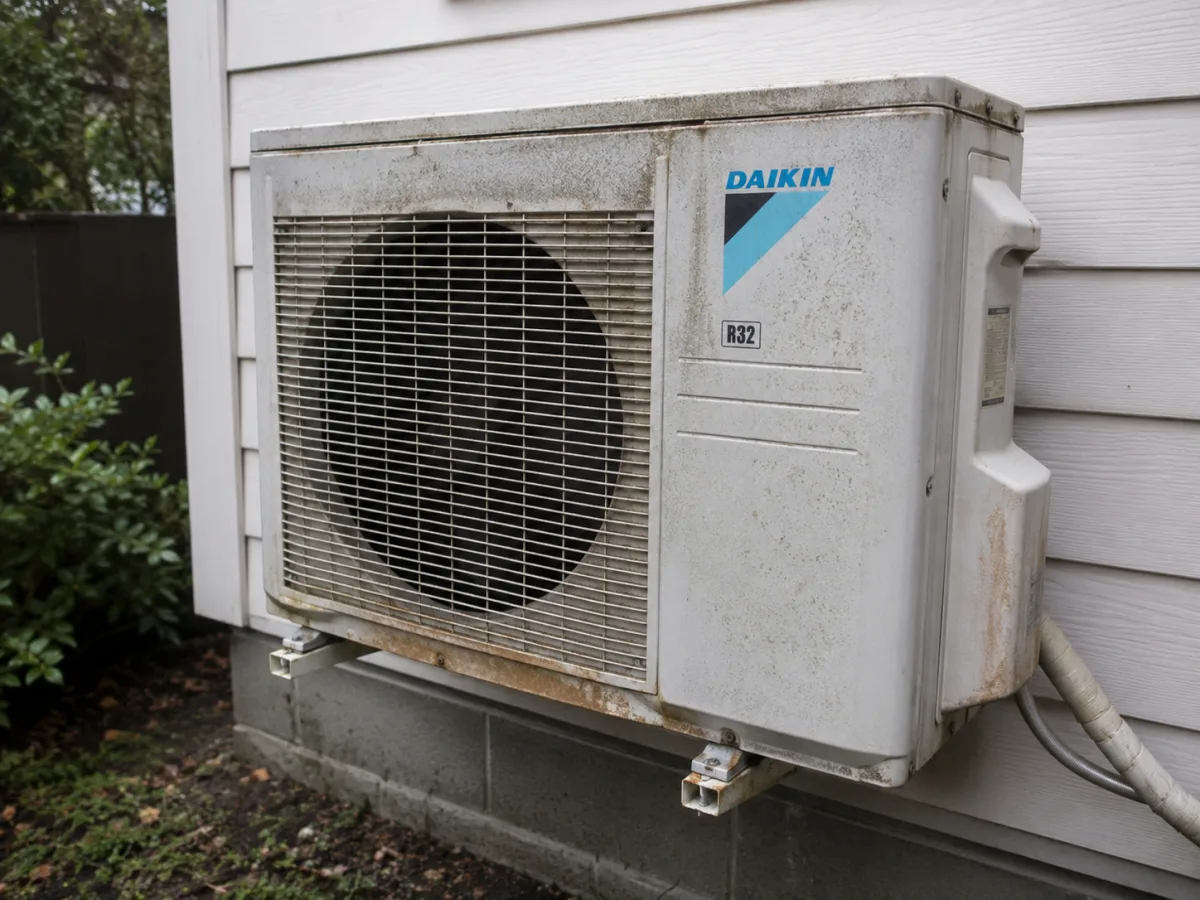
The local picture is different, and the reason is the environment. Outdoor units on this coast sit in salt air, and corrosion does not stop at the cabinet. It gets onto circuit boards and wire terminals, and it usually shows up as a greenish surface corrosion before it progresses to a failure.
None of that means your U4 is definitely a board. It means the order of likelihood shifts once you are testing systems that have spent years within a few kilometres of the water. Proper testing is what confirms it either way.
Why Lizards And Insects Cause Board Faults
This is the part that does not appear in overseas material at all, and it comes up regularly on jobs here.
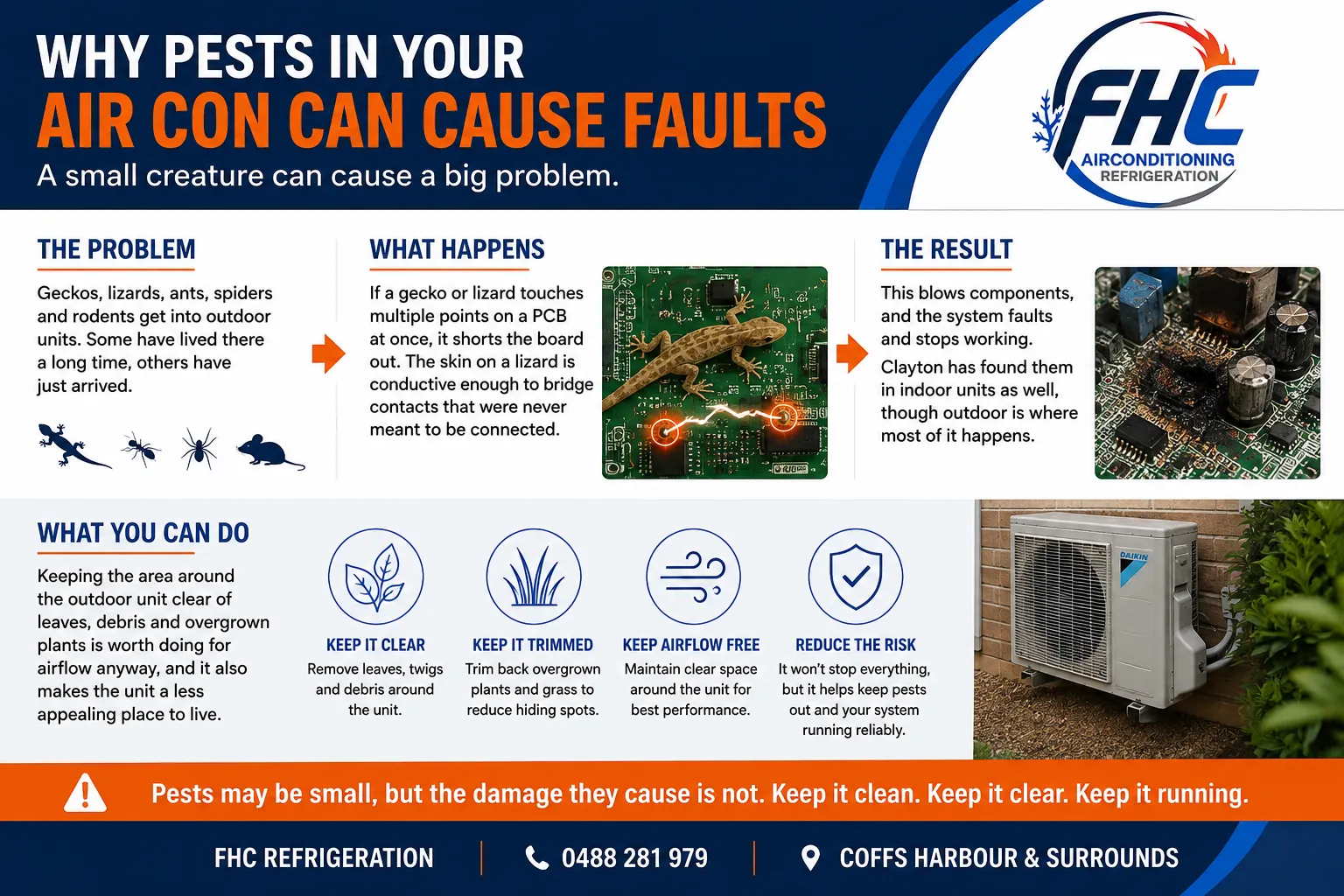
Geckos, lizards, ants, spiders and rodents all get into outdoor units. Some have clearly been living there a long time, others have just arrived. The problem is not the animal itself. It is what happens when one makes contact across a board.
If a gecko or a lizard touches multiple points on a PCB at once, it shorts the board out. That blows components, and the system faults and stops working. The skin on a lizard is conductive enough to bridge contacts that were never meant to be connected.
They are not confined to the outdoor unit either. Clayton has found them in indoor units as well, though outdoor is where most of it happens.
There is a practical takeaway in this. Keeping the area around the outdoor unit clear of leaves, debris and overgrown plants is worth doing for airflow anyway, and it also makes the unit a less appealing place to live. It will not stop everything, but it helps.
Can You Fix A U4 Yourself?
No, and this one is not a matter of preference.
A U4 diagnosis means opening covers and testing live terminals and control boards. That is not homeowner territory on any system, and on a Daikin it means working around a communication bus carrying its own voltages.
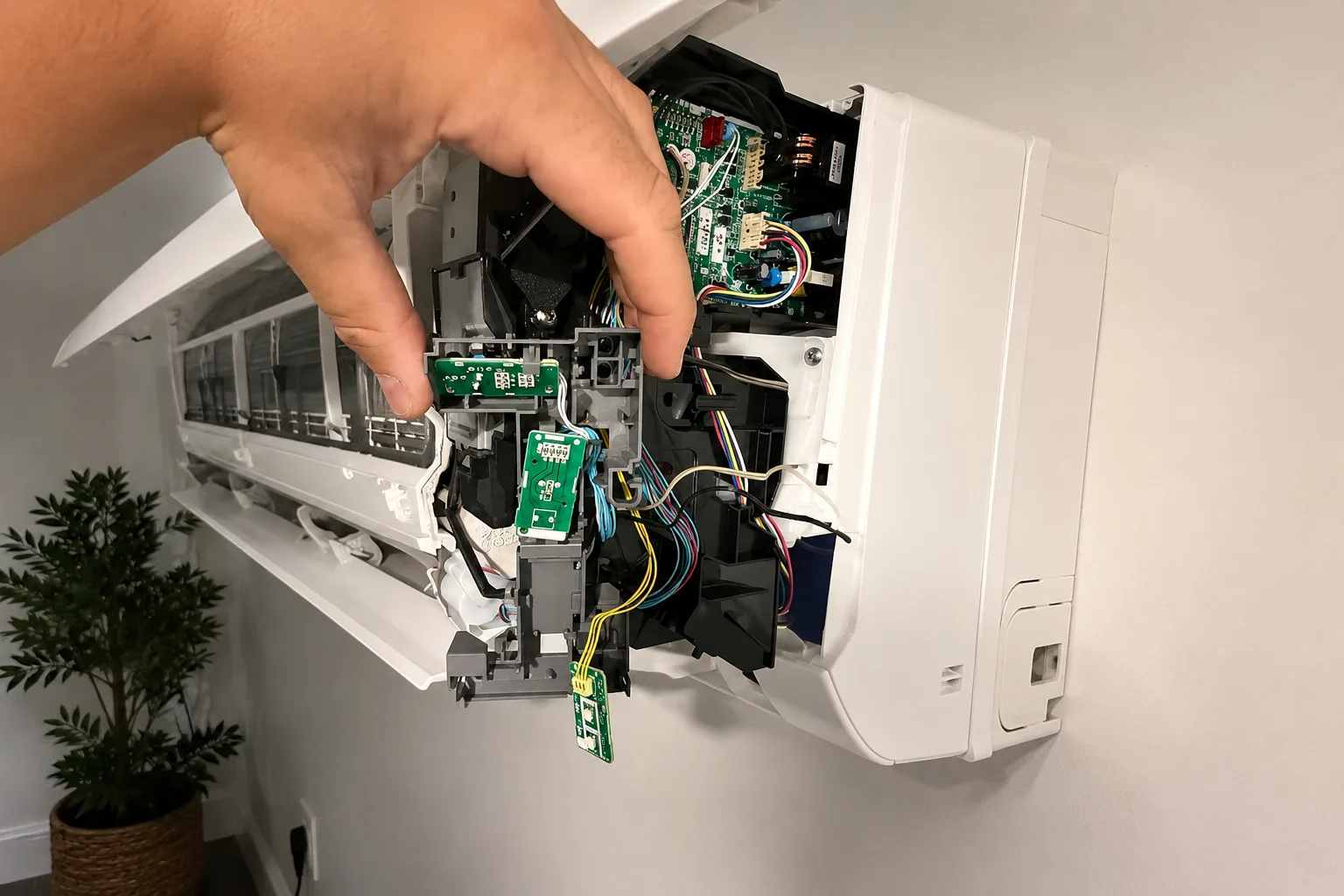
There is one check worth doing before you call. Confirm the outdoor unit actually has power and that the breaker has not tripped. What looks like a communication fault is occasionally a supply problem, and that is a two minute check that costs nothing.
Beyond that, anything involving refrigerant is legally restricted to technicians holding a current Refrigerant Handling Licence from the Australian Refrigeration Council. FHC works under RTA AU069269.
How Long Does A U4 Repair Take?
That depends on what testing finds, but parts availability is usually not the hold up.
If the outdoor board needs replacing, most come up from Sydney in 2 to 3 days. Depending on the unit it can be under a week. Older systems where the manufacturer has stopped producing parts are the exception, and that is a conversation about whether the repair is worth doing at all rather than a wait.
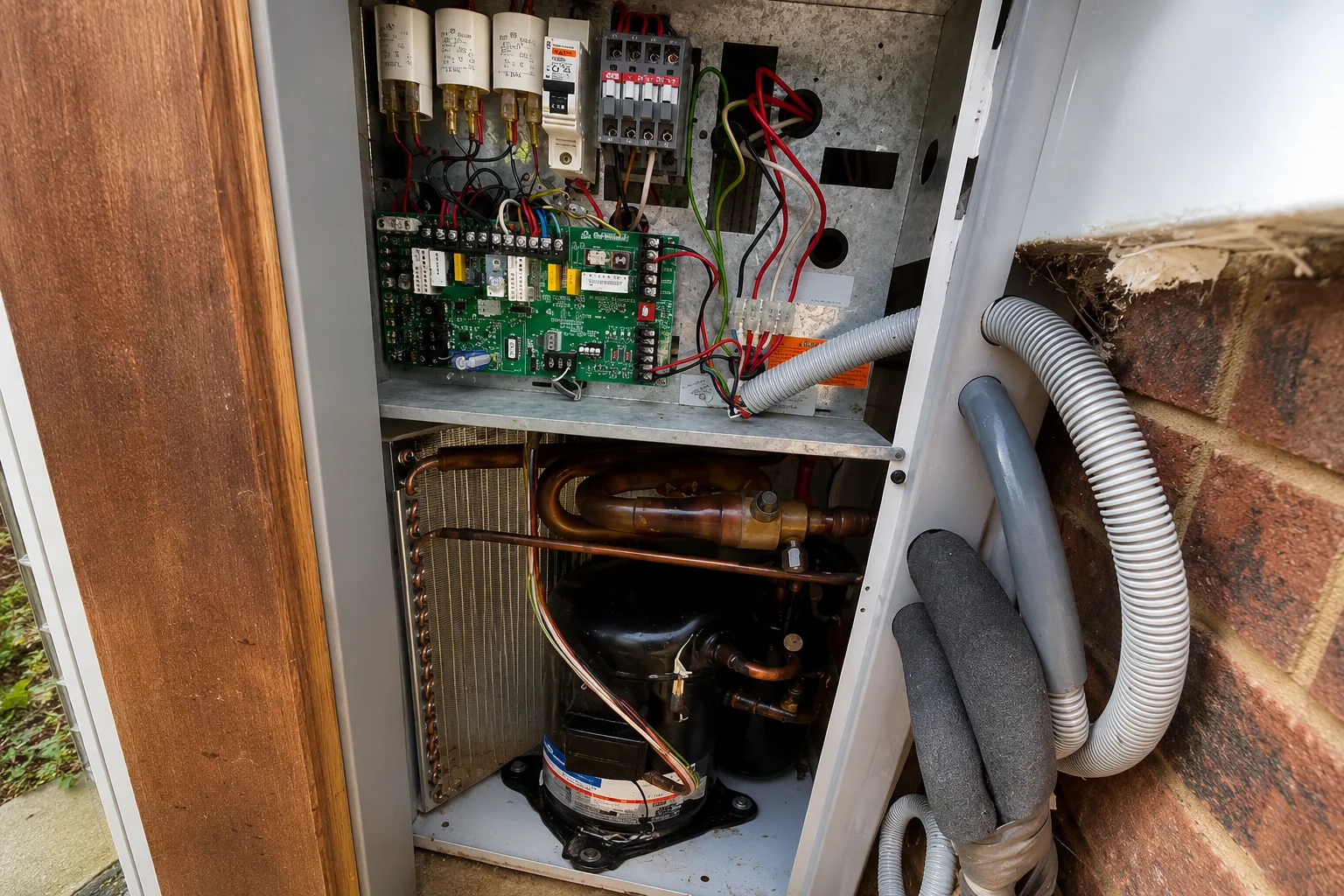
We cannot put a repair time on a system that has not been inspected, and anyone who does is guessing. What we can tell you honestly at the time of booking is what the likely part is and roughly what the supply situation looks like.
What Does A U4 Diagnosis Cost?
Quotes are free. Diagnostics aren't, because finding a fault takes time on site.
The rate is $132 per hour with a one hour minimum, billed in 15 minute blocks after that. Travel is charged at the same rate with no separate kilometre charge. The same applies to homes and businesses. Outside 6am to 6pm it's a three hour minimum at double time, which is $264 per hour and $792 minimum.
Parts and any labour beyond the first hour are separate, and they are quoted once the fault is confirmed rather than estimated over the phone. Broad repair pricing on an unseen system is not something we will give you, because the number would be made up.
Other Daikin Fault Codes Worth Knowing
U4 is one of a set. A few others come up often enough to be worth recognising when they appear on the remote.
Codes starting with U generally relate to the system as a whole rather than one component, which is why U4 covers the communication link. Codes starting with A tend to point at the indoor unit, E codes at the outdoor unit, and H, F and J codes at sensors and individual components.
The pattern is worth knowing for one reason: the letter tells you roughly where to look, but none of them tell you the cause. A code narrows the search. Testing confirms the fault. We take the same approach on Fujitsu fault codes, which use a different system again.
If your system is throwing a code you cannot find, write down exactly what shows on the display, including whether it flashes, and ring it through.
The Bottom Line
U4 tells you the two halves of your system have stopped talking. It rules out refrigerant, which is useful, and it points at something electrical, which is not a homeowner repair.
Most guides will send you looking at wiring. On this coast, salt air on boards and the occasional gecko across a set of contacts mean the outdoor PCB comes up more often than the international material suggests. Testing is what settles it.
If your Daikin is showing U4, write the code down, check the breaker, and give us a call on 0488 281 979. We handle aircon repairs across Coffs Harbour and the Mid North Coast, and Daikin is the brand Clayton has installed most.