

The Short Version
- Cool rooms must hold 5°C or colder and freezer rooms need to stay at -18°C or colder to meet Australian food safety law.
- A cool room or freezer room built for one business rarely suits another. Floor traffic, door frequency, product load and ambient heat all change the design.
- Salt air on the Coffs Coast wears out door seals, coils and circuit boards faster than inland systems.
- FHC Refrigeration designs and installs cool rooms and freezer rooms to suit the space, then handles repairs, door seal replacement and preventative maintenance.
- Catching a seal or airflow issue early costs far less than losing stock or replacing a failed compressor.
In This Guide
- What Is the Right Temperature for a Cool Room or Freezer Room?
- Why Can't You Just Buy a Freezer Room Off a Spec Sheet?
- How Floor Load Changes a Freezer Room Design
- How Often Is the Door Really Opening?
- Why Do Coffs Coast Cool Rooms Wear Out Faster?
- What Does FHC's Cool Room and Freezer Room Service Actually Cover?
- Why Door Seals Need Replacing Before They Fail Completely
- What Does Preventative Maintenance for a Cool Room Actually Involve?
- When Should You Call Someone About Your Cool Room?
- Frequently Asked Questions
If you run a café, restaurant or food business on the Coffs Coast, a freezer room isn't something you buy off a spec sheet and bolt onto the back of the kitchen. The room needs to match how your business actually operates: how often staff are in and out, how much stock sits in there at once, and how hard the coastal climate is going to work the equipment. Get the design right and the room quietly does its job for years. Get it wrong and you are looking at temperature swings, early repairs, and stock you can't sell.
This guide walks through what actually shapes a good freezer room or cool room design, and what FHC's commercial refrigeration team looks at before recommending anything.
What Is the Right Temperature for a Cool Room or Freezer Room?
A cool room needs to hold 5°C or colder, and a freezer room needs to stay at -18°C or colder. These aren't house rules, they come from Australian food safety law.
The specific rule sits under Standard 3.2.2 of the Food Standards Code, which covers how potentially hazardous food has to be stored, displayed and transported. Anything between 5°C and 60°C is considered the temperature danger zone, the range where bacteria multiply fastest. That is the reason cool room and freezer room performance isn't just about comfort or convenience for a food business, it is a compliance requirement.
Why Can't You Just Buy a Freezer Room Off a Spec Sheet?
Because the refrigeration system needs to be sized to the room's product load, traffic and conditions, not just its floor area. Rooms built to the same dimensions can need completely different systems, depending on what is going in and out of them.
A busy commercial kitchen loading and unloading stock all day puts a very different demand on a system than a low-traffic storage room accessed a few times a shift. Poorly matched doors and layouts also contribute to temperature fluctuation and unnecessary system wear over time. This is the main reason a freezer room designed for a different business, or bought as a generic off-the-shelf unit, often underperforms once it is actually in daily use.
How Floor Load Changes a Freezer Room Design
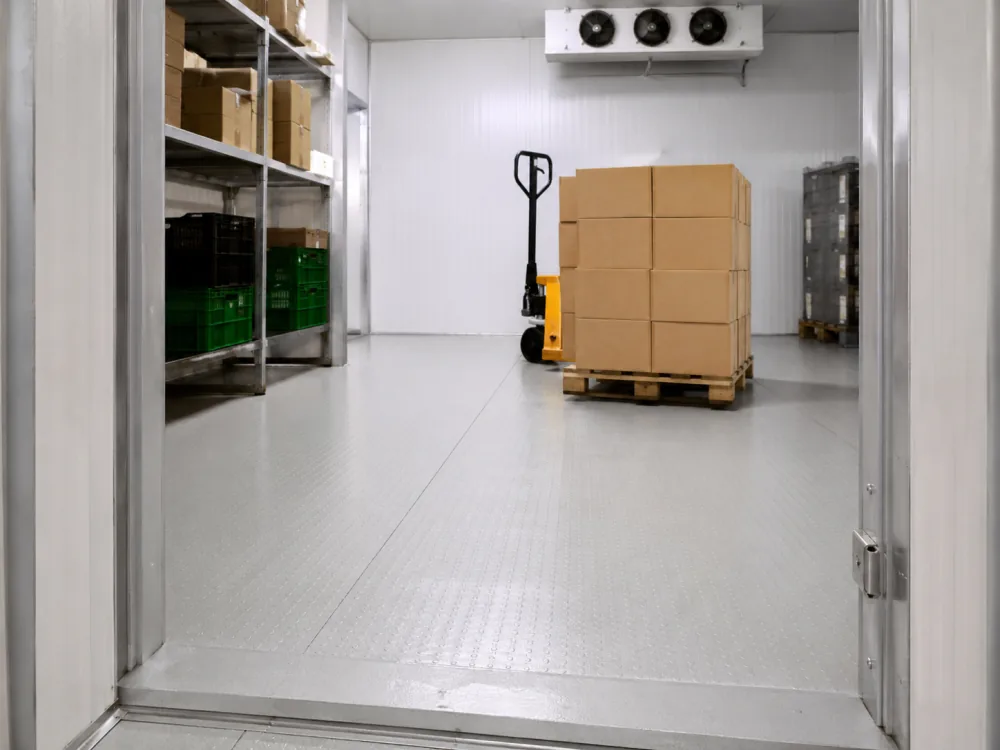
Most people planning a freezer room think about temperature and size first, and floor loading last, if at all. It is worth thinking about earlier.
Standard cool room flooring is generally built for foot traffic only, roughly 800 pounds per square foot (around 3,900kg per square metre) of evenly distributed stationary load. That is fine for staff walking in and out with hand-carried stock. It isn't fine for pallet jacks, forklifts, or carts loaded with kegs, boxed stock or bulk produce, which concentrate a lot of weight on a small area and need reinforced flooring designed for rolling loads.
Without properly insulated flooring, cold air escapes and warm air creeps in from below, which can cause temperature inconsistency inside the room. This is one of the reasons a proper on-site assessment matters. It isn't something you can get right from a catalogue.
How Often Is the Door Really Opening?
Door frequency is one of the biggest hidden variables in a freezer room design, and it is easy to underestimate. A busy café or restaurant kitchen might have staff in and out of the cool room dozens or even hundreds of times a day.
Every one of those openings puts load on the door gasket, hinges and seal alignment. Over time, seals loosen, hinges sag, and small gaps start letting warm air in, which forces the system to work harder to hold temperature. A room designed without accounting for real-world door traffic is set up to wear out its seals and put unnecessary strain on the compressor faster than it should.
Why Do Coffs Coast Cool Rooms Wear Out Faster?
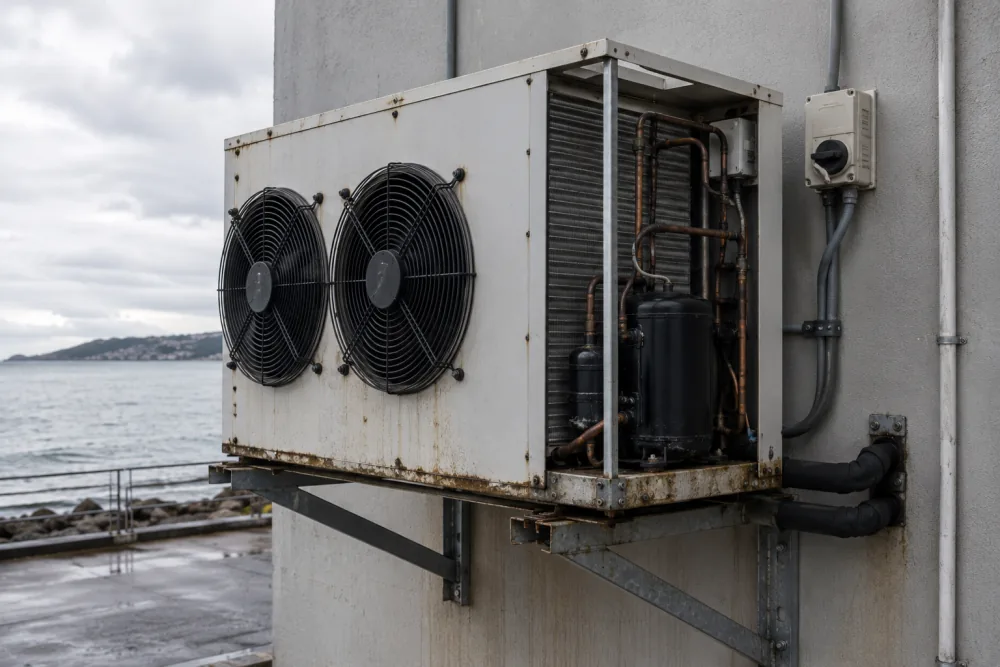
Salt-laden air is one of the most consistent issues we see on cool rooms and freezer rooms along the Coffs Coast. It settles on metal components and speeds up corrosion on condenser coils and exposed fittings, which inland systems simply don't deal with at the same rate. Refrigerant line sets near the coast can see a working life of around 5 to 10 years compared with 10 to 15 years further inland, largely because of that ongoing salt exposure.
We see this play out on real jobs. On a recent job, a cool room wasn't holding temperature, and the room conditions checked out fine on inspection, so we moved on to testing the refrigeration system itself. An evaporator fan looked like it was running correctly but was actually running backwards, and part of the evaporator coil had iced over as a result. Testing on the outdoor unit found the system was also short of refrigerant, and we traced a leak to a U-bend on the outdoor condenser coil, exactly the kind of fitting that takes a beating from coastal air over time. We recovered the refrigerant, repaired the leak, replaced the evaporator fan motor, pressure-tested the condenser, recharged the system to the correct weight and confirmed full operation before handing it back.
Neither of those faults was obvious from the room alone. That is why the diagnostic process matters as much as the initial design, and why coastal cool rooms generally need closer attention than the same equipment would inland.
What Does FHC's Cool Room and Freezer Room Service Actually Cover?
FHC designs and installs cool rooms and freezer rooms tailored to the business, then handles repairs, door seal replacements, and preventative maintenance to keep cold storage compliant and operating efficiently. That covers the full lifecycle of the room, not just the initial build.
Because every job depends on the space, the product being stored and the access requirements, we don't publish a fixed price for cool room or freezer room design and installation. An on-site assessment lets us recommend the right system and give you a proper written quote, with no hidden costs. If you already have a room and need repairs or a service, our standard business-hours call-out is $132 including the first hour of labour, with further costs depending on parts, refrigerant and access. You can see the full cool room service scope on our website.
Why Door Seals Need Replacing Before They Fail Completely
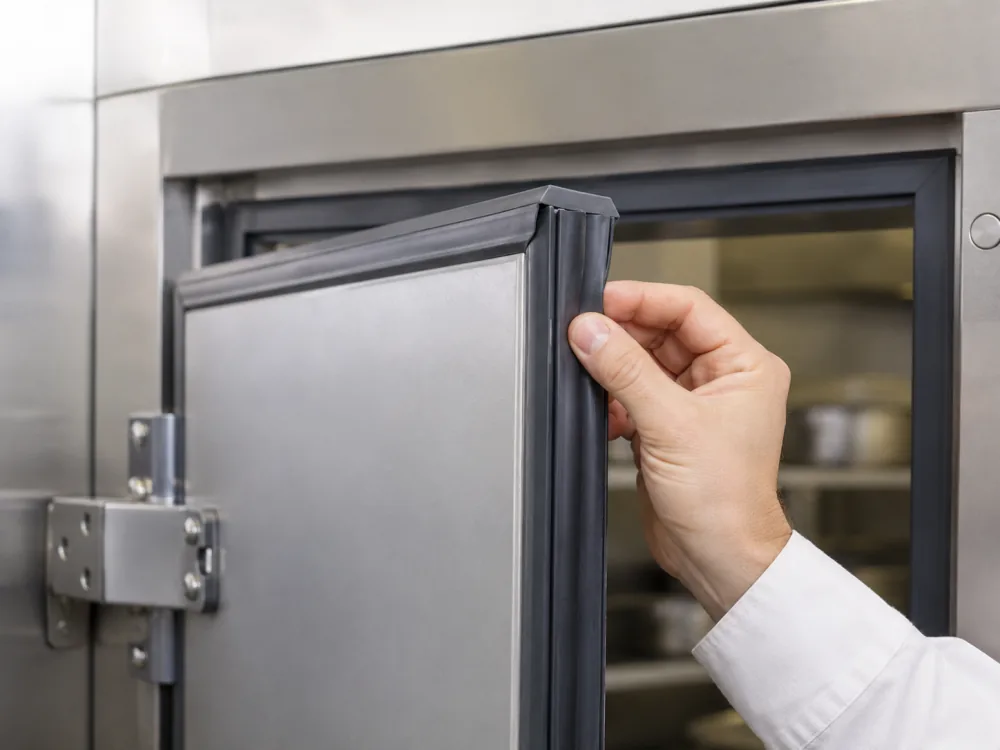
A worn door seal makes the compressor work harder long before the seal fails outright or becomes visibly damaged. That extra strain adds up over months, showing up as higher running costs and, eventually, as a compressor issue that needs proper diagnosis and repair.
Waiting until a seal is obviously torn or a door won't stay shut means the room has probably already been losing efficiency for a while. Replacing a seal on its own is a straightforward job. Letting it run down until it takes the compressor with it is a much more expensive one, and can point back toward the kind of aircon repairs work that a bit of earlier attention would have avoided.
What Does Preventative Maintenance for a Cool Room Actually Involve?
A proper cool room or freezer room service starts with the room itself, not the refrigeration system. That means checking door condition, seals, product load and any airflow blockages first, since a room issue can look exactly like a refrigeration fault from the outside.
If the room checks out, the refrigeration system is tested next. Depending on what is found, this can involve repair work where approved, pressure testing, recharging and recommissioning, followed by final operational checks to confirm everything is working as it should. Regular maintenance doesn't guarantee a system will never break down, but it does mean small issues, like a slow leak or a fan running backwards, tend to get caught while they are still cheap to fix.
When Should You Call Someone About Your Cool Room?
Call as soon as you notice a temperature swing, ice buildup around the door, or a door that won't seal properly, rather than waiting until stock is at risk. These are usually early signs, not sudden failures, and they are far cheaper to deal with early.
If something feels off with your cool room or freezer room, or you are planning a new one and want it designed around how your business actually runs, get in touch and we will arrange a site visit.
Frequently Asked Questions
What Is the Difference Between a Cool Room and a Freezer Room?
A cool room holds chilled stock at 5°C or below, while a freezer room holds frozen stock at -18°C or below. The lower target temperature in a freezer room means thicker insulation, a different refrigerant setup and a larger compressor than a cool room of the same size, which is another reason the two aren't interchangeable at design stage.
What Is the 2-Hour/4-Hour Rule in Australia?
The 2-hour/4-hour rule is an FSANZ guideline that sets limits on how long food can sit in the temperature danger zone between 5°C and 60°C. Under 2 hours, it can go back into the cool room. Between 2 and 4 hours, it has to be used straight away. Past 4 hours, it needs to be thrown out. It matters for cool room operators because staff moving stock in and out for prep are still bound by this rule the moment product leaves the room, not just while it is sitting inside.
What Are the Most Common Cool Room Problems?
The most common issues are worn door seals letting in warm air, evaporator fans running backwards or failing, refrigerant leaks, and airflow blocked by stock stacked too close to the coil. Most of these start small and are cheap to fix early, but left alone they put ongoing strain on the compressor and can end up costing far more.
How Long Does a Cool Room or Freezer Room Last?
It depends on the component and the environment, and on the Coffs Coast, salt air is the biggest factor shortening that lifespan. Refrigerant line sets near the coast typically last around 5 to 10 years compared with 10 to 15 years inland. Door seals and gaskets generally need replacing well before the compressor or main refrigeration components, which is why they are one of the first things checked during a service.
How Much Does a Cool Room or Freezer Room Installation Cost in Australia?
It depends on room size, insulation, refrigeration capacity and site conditions, so we don't quote a fixed price without seeing the space. An on-site assessment lets us recommend the right system and give you a proper written quote, with no hidden costs.
The Bottom Line
A freezer room is only as good as the thinking that went into it before installation. Floor load, door traffic, product type and the Coffs Coast's own salt air all shape what a room actually needs, and none of that comes off a standard spec sheet. FHC's ARCtick-licensed team handles cool room installation and freezer room design around your actual space, then keeps them running with repairs, seal replacement and ongoing maintenance.