

Whether you've typed how often should ac be serviced into Google or you're just trying to work out if you're overdue, the honest answer is: it depends on your system, how hard you run it, and where you live. There isn't one number that covers every home. What suits a holiday house that runs for six weeks a year won't suit a ducted system carrying a Coffs Harbour household through a full summer, and living near the coast changes the equation again. Below is the straightforward answer, the reasoning behind it, and how to tell if your own system needs attention sooner than the calendar suggests.
How Often Should You Service Your Air Conditioner?
For most homes on the Coffs coast, a general service every 6 months and a comprehensive chemical clean every 12 months is the schedule that keeps a system working the way it should.
The 6 month interval is about salt more than anything else. Getting it off the system regularly is what limits corrosion, and that matters more here than it would for the same unit installed well inland. The 12 month chemical clean is the deeper job: the fan barrel, the evaporator coil and everything a filter wipe cannot reach.
Usage moves you within that band rather than outside it. A holiday house running a handful of weeks a year sits at the longer end. A family home running the system daily through a hot summer sits at the shorter end, sometimes tighter than that. Commercial systems are a separate conversation, because a cafe kitchen running cooling most of the day, most of the year, is a different workload entirely.
There is a practical reason to stay on top of it beyond the equipment itself. Heating and cooling account for 20% to 50% of household energy use in Australia depending on climate zone, more than any other appliance category. A system that has drifted out of condition quietly pushes that figure higher every season it goes unserviced.
Does Coastal Air Change How Often Your Aircon Needs Servicing in Coffs Harbour?
Yes, and it is the main reason the interval here is 6 months rather than 12. Salt carried in off the ocean is the single biggest factor pushing servicing shorter on this coast.
Corrosion is not limited to the outdoor cabinet. We regularly see it on printed circuit boards and wire terminals in coastal systems, showing up first as a greenish surface corrosion before it progresses. Manufacturers treat this as a maintenance issue rather than a defect: Daikin's own guidance is that proper maintenance and positioning are what combat salt damage and atmospheric corrosion near the coast.
Exposure is graded, not uniform. Australian corrosivity zones are classified under AS 4312, which separates marine environments into surf, exposed and calm categories based on proximity to breaking surf. Most of Coffs Harbour sits in the more aggressive end of that scale, which is why a system here wears differently to the same unit an hour inland.
Do Inland Systems Need Servicing as Often?
Often yes, but for a different reason. Inland it is dust rather than salt, and in a particularly dusty area the schedule ends up looking much the same.
The concern is the condenser. Once it loads up with dust it cannot shed heat properly, and that makes the compressor run hotter than it should. Left alone, that means damage, lost capacity and a shorter life out of the system. Somewhere that is not especially dusty can stretch the interval further, right up until usage climbs, at which point how hard the system runs takes over as the deciding factor.
The useful way to think about it: salt on the coast and dust inland are the same problem wearing different clothes. Both load up the parts that need to stay clean, and both are handled by servicing rather than by repairs later.
What's Actually Included in an Aircon Service?
FHC's standard maintenance visit is a Comprehensive Chemical Bag Clean, a full service that goes beyond a quick filter wipe. It covers the indoor unit, the fan barrel, and the evaporator coil, along with filter cleaning, drain and condensate checks, airflow checks, and general operating checks.
Pricing sits between $140 and $200 AUD, depending mainly on the type of system being cleaned. It typically takes 30 to 60 minutes, running longer on heavily contaminated systems or setups that need more dismantling to access properly. If your system hasn't had a proper chemical bag clean in a while, that's usually the starting point rather than a repair, most performance complaints trace back to a system that simply needs cleaning.
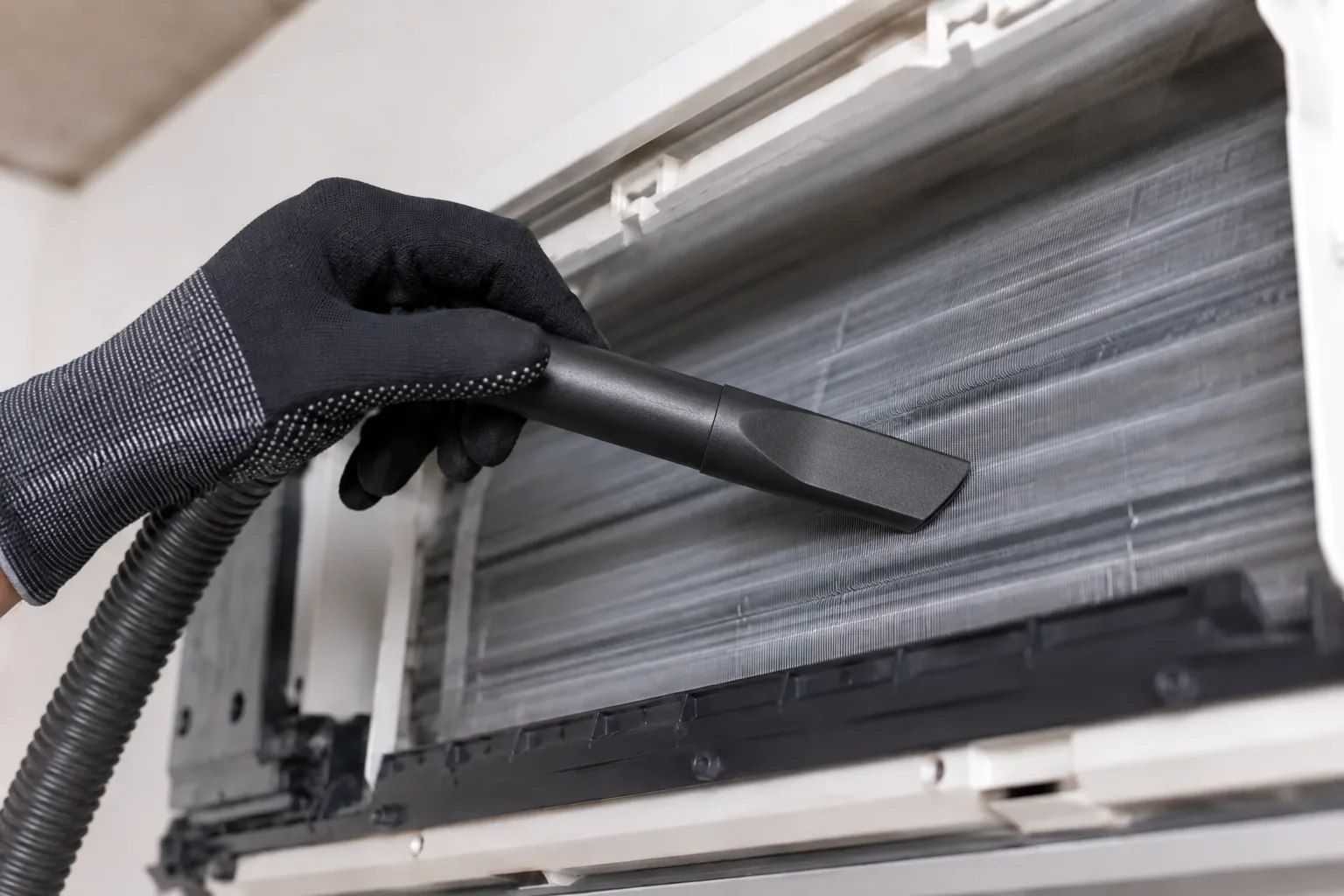
Each part of that process earns its place. A clogged fan barrel restricts the volume of air the system can actually move, regardless of how well the compressor is running. A dirty evaporator coil can't transfer heat properly, so the unit works harder for a smaller temperature drop. Drain and condensate checks catch a blockage before it turns into water pooling somewhere it shouldn't. None of it is complicated on its own, but skipping any one part is usually where a "why isn't this cooling like it used to" call starts.
How Much Does an Aircon Service Cost?
A comprehensive service with FHC typically costs $140 to $200 AUD, depending on the system type. That figure covers the clean and maintenance visit itself.
If something's actually wrong rather than just dirty, for example a fault, a strange noise, or reduced cooling that a clean doesn't fix, the cost depends on what's found once the system's diagnosed: the parts needed, the labour involved, and how accessible the unit is. Diagnostics are charged at $132 per hour with a one hour minimum, then billed in 15 minute blocks. Travel is charged at the same rate with no separate kilometre charge. The same rate applies to homes and businesses. Broad repair pricing can't be quoted without seeing the system, so the honest next step is to request a quote once it's been assessed, or try the instant estimate for a ballpark before you book.
What Can You Check Yourself Between Services?
You don't need a licence to keep an eye on the basics between professional visits. A few simple checks go a long way:
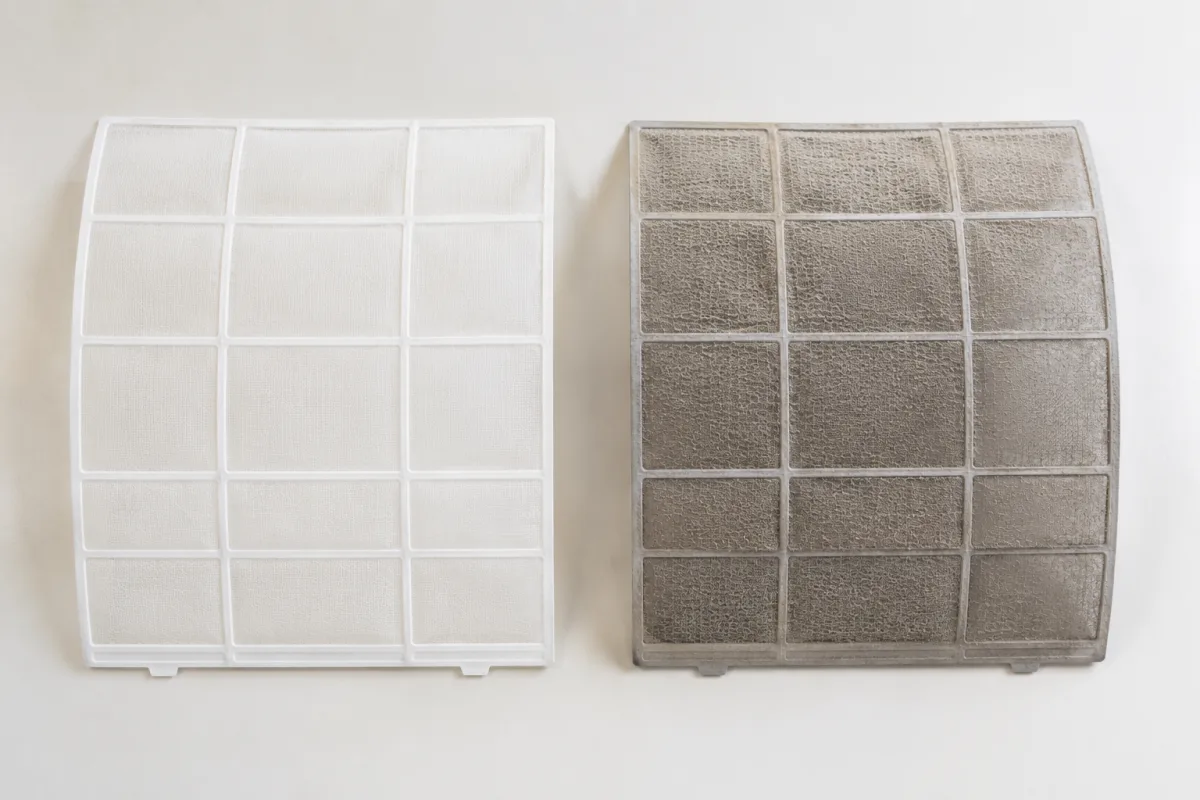
- Filters: clean or check every 1 to 3 months, more often if you have pets, allergies, or heavy use. Dirty filters significantly reduce airflow and efficiency, so this is the single most useful thing you can do yourself.
- Vents and louvres: wipe down visible dust, avoiding harsh cleaning chemicals.
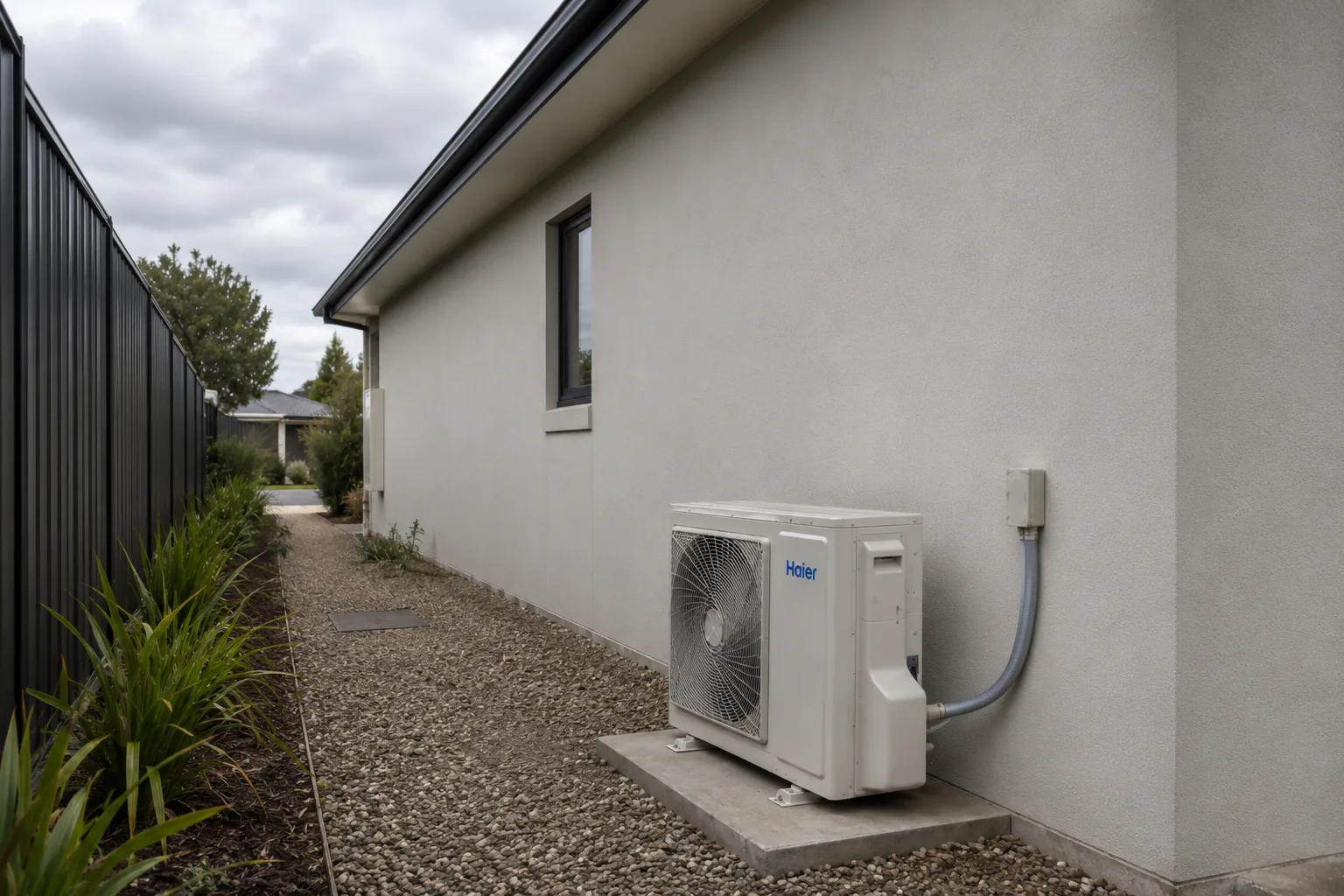
- Outdoor unit: keep it clear of leaves, debris, and overgrown plants so airflow around the compressor isn't restricted.
- The pattern we recommend is straightforward: book a licensed technician for the actual service, and wipe down filters and dust yourself in between.
Anything beyond that, refrigerant checks, electrical work, or deeper cleaning, is where a professional visit takes over.
What Happens If You Skip a Service?
Skipping a service rarely causes an immediate breakdown. It shows up gradually instead, as reduced airflow, a higher energy bill, and eventually a repair that could have been avoided with regular maintenance.
One recent job makes the point better than any figure. We attended site to find a split system covered in mould and debris from lack of maintenance. The gap between services had been long enough that the fan barrel had seized onto the fan motor and could not be removed. Where contaminants build up like that, the evaporator fins deteriorate faster than they otherwise would. Outside, the unit was covered in salt that regular maintenance would have kept off, and it had rusted to the point of being a work hazard as well as a likely failure. That system had to be replaced rather than repaired.
What Does Neglect Look Like on a Ducted System?
The same neglect shows up differently on ducted, because there is more of the system out of sight. Ductwork and joints, along with supply grilles, return grilles and their boxes, can all become compromised over time. Rodent activity is a common cause, and a roof space is exactly where that happens without anyone noticing until airflow drops off or something starts making a noise.
A few signs it's worth booking sooner rather than waiting for the next scheduled visit:
- Weaker airflow than you remember, even on the highest fan setting
- A noticeable jump in your power bill without a change in how you're using the system
- Musty smells when the unit starts up, often a sign of mould or grime buildup
- Unusual noises, or the outdoor unit running without the compressor actually doing anything
The most reliable signal is the system's own performance. Once a service is due, you notice a change in heating or cooling capacity, because airflow through the condenser and evaporator coils has dropped off. Open it up at that point and the dust and grime buildup is visible, and how much of it there is tracks fairly closely with how long it has been left.
Filters are the part of that you can see for yourself. Dirty filters reduce airflow and energy efficiency significantly, and affect heating performance as well as cooling.
Repair or Replace: How Do You Decide?
There's no single trigger point, the age of the system and the cost of the repair both matter, and they matter together rather than separately.
One rough guide used in the HVAC industry overseas is the $5,000 rule: multiply the system's age in years by the estimated repair cost, and if the result is above $5,000, replacement is usually the better long-term call. It's a US guideline built around US repair and replacement costs, so treat the number itself loosely, the logic behind it (an old system with an expensive repair is a different decision to a young system with a cheap one) holds regardless of where you are.
We'd add one more thing to weigh: the cheapest repair quote isn't always the best value. A rushed or underpriced fix can mean a repeat callout later, while a properly diagnosed aircon repair backed by a workmanship warranty tends to hold up. FHC's repairs carry a 12-month workmanship warranty where conditions apply, on top of whatever the manufacturer's own warranty covers.
Parts availability changes the calculation too, and it doesn't always point toward replacement the way you'd expect. One system we worked on recently was around 20 years old, and manufacturers had stopped making parts for most units of that age. This one still had an indoor fan motor available, priced at roughly $1,000. A new unit of the same size would have cost $15,000 or more, and the rest of the system was still in good condition, so the repair was the clear choice.
Smaller split systems are a different story. If a 10-year-old split is out of warranty and the compressor's gone, that's a repair we approach carefully. Compressor changes on smaller split systems can bring on other issues down the track, so it becomes a genuine cost comparison between that repair and a full replacement, not an automatic like-for-like swap.
Why Only a Licensed Technician Can Do the Full Job
Filter cleaning and dusting are fair game for a homeowner. Anything involving refrigerant isn't, and that's not just a preference, it's the law. Anyone servicing, installing, or maintaining equipment that handles refrigerant needs to hold a current Refrigerant Handling Licence issued by the Australian Refrigeration Council.
That's the ARC licence you'll see referenced on quotes and invoices. Meet Clayton, FHC's founder and lead technician, and you'll find that licence alongside a handful of others picked up over eight years in the trade, covering air conditioning and refrigeration work across several states. It's not a box-ticking exercise, refrigerant that's mishandled is both an environmental issue and, in the wrong hands, a safety one.
When's the Best Time to Book a Service in Coffs Harbour?
Ideally, before the season that's about to put the most demand on the system. For most homes, that means booking a cooling service in spring, ahead of summer, rather than waiting until the first heatwave when everyone else has had the same idea.
If you rely on a reverse-cycle system for heating over winter too, it's worth a second check-in before the cooler months, even if that just means cleaning the filters yourself between the two seasons. Planning a service before peak season rather than around a fixed calendar date holds up just as well on the NSW north coast as anywhere else.
Booking early has a practical upside too. Availability tightens up once the weather turns and everyone's system decides to play up at the same time, so a spring booking usually beats a January phone call when every technician in the region is already flat out.