


Split system vs ducted isn't really a contest with a winner. It's a question of which one actually solves the problem you have. A single room that needs cooling and a whole house that needs even, consistent comfort are two different jobs, and the system that's right for one is often the wrong, expensive answer for the other. Here's how the two actually differ, what each one costs to install, and how to work out which fits your home rather than just picking whichever one a brochure says is best.
Split System vs Ducted: What's the Actual Difference?
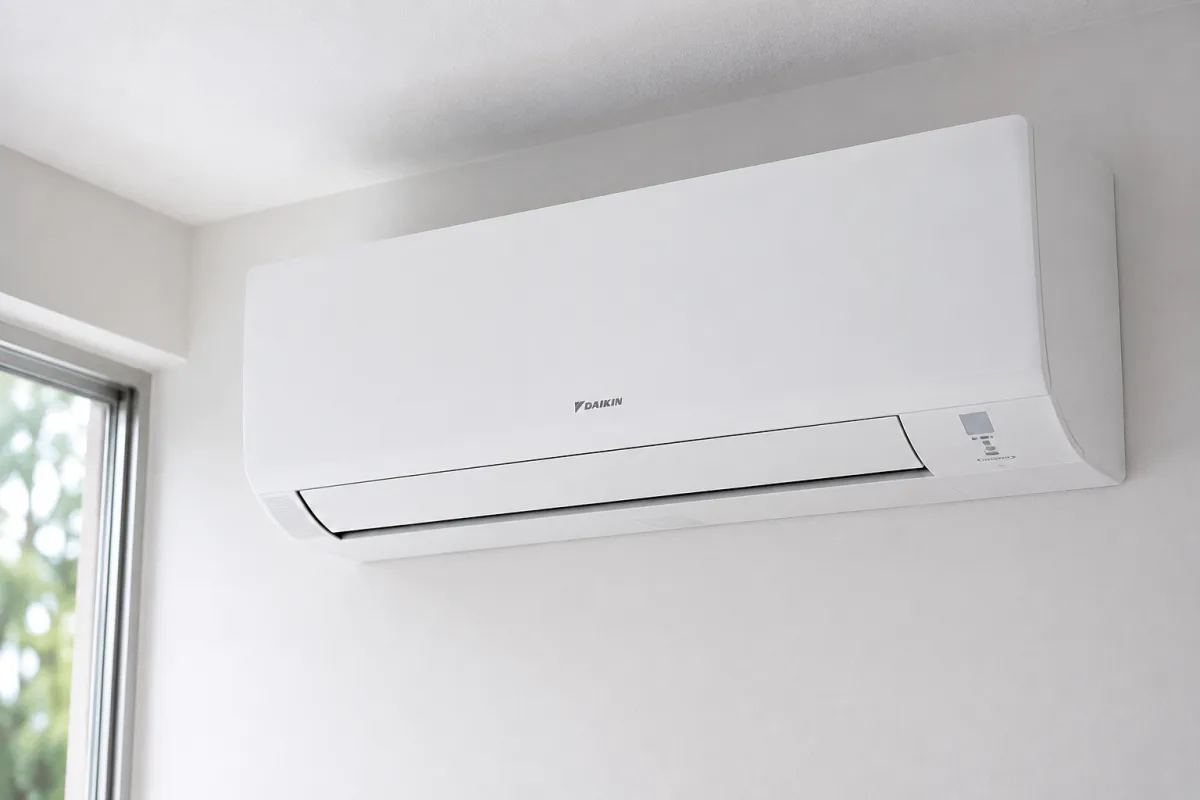
A split system uses one indoor unit, usually wall-mounted, connected to an outdoor compressor to heat or cool a single room or open-plan area. Ducted air conditioning uses one central unit, typically installed in the roof space, that distributes air through a network of ducts to vents in multiple rooms across the home.
Both are reverse-cycle options in most cases, meaning they handle heating and cooling from the same system. YourHome, the Australian Government's guide to sustainable homes, lists split and ducted alongside portable, window, and multi-head systems as the main air conditioner types available in Australia. The core difference isn't efficiency or quality, it's coverage: one room at a time, or the whole house at once.
How Do You Decide Which One Fits Your Home?
If you need to condition one room, a rental, or an apartment, a split system is usually the simpler and cheaper fit. If you want consistent comfort across a whole home, particularly in a new build or a major renovation, ducted is generally the better long-term fit.
A few practical questions help narrow it down. How many rooms actually need conditioning at once? Is the home a new build, an existing house with roof space to work with, or a tightly built renovation where running ductwork is difficult? What's the upfront budget, and how does that weigh against running a whole-home system versus adding split units room by room over time? None of these have a universal right answer, they depend on the property, which is why a proper assessment beats guessing.
A few common scenarios tend to point one way or the other:
- Apartment or rental: usually a split system, lower upfront cost and no structural work required.
- New build: ducted is worth planning in from the start, before walls and ceilings are finished, since retrofitting later is harder.
- Established home, one problem room: a split system, no need to condition the whole house for one space.
- Established home, whole-house comfort wanted: depends on roof space, worth an actual inspection before ruling ducted in or out.
- Multi-storey home: often a mix, ducted for one level and split systems for the other, rather than one system trying to do everything.
If you want a straight answer for your own home, request a quote and we'll size it against the actual space rather than a generic rule of thumb.
Split System vs Ducted: What Does Each One Cost to Install?
A 2.5kW split system, supplied and installed, typically runs $1,600 to $2,500 AUD, with the price moving depending on brand, unit location, access, and pipe-run conditions. A normal installation takes 2 to 4 hours.
An 18kW, 6-zone ducted system typically costs around $22,500 AUD, changing with zoning requirements, property layout, the number of supply-air outlets, and the capacity needed. Installation normally takes 1 to 3 days.
Those two figures aren't a fair head-to-head, they're different capacities solving different problems, a single room versus a full six-zone home. The honest comparison is split system installation for the room or two you actually need conditioned, weighed against what a full ducted system costs for the whole property. A quote against your actual floor plan is the only way to get real numbers either way.
Here's the quick side-by-side, using those same two example systems:
| Split system (2.5kW) | Ducted (18kW, 6-zone) | |
|---|---|---|
| Coverage | One room or open-plan area | Whole home, multiple zones |
| Typical installed cost | $1,600 to $2,500 AUD | Around $22,500 AUD |
| Typical install time | 2 to 4 hours | 1 to 3 days |
| Visible hardware | Wall-mounted indoor unit | Ceiling vents only |
| Best suited to | Single rooms, apartments, rentals | New builds, major renovations, whole-home comfort |
| Roof space required | No | Yes |
That table is a guide, not a quote. Actual pricing depends on your specific home and system size.
Which One Costs Less to Run?
It depends on how much of the home actually needs conditioning, not on the system type alone. A single split system running in one room is cheap because it's only ever cooling or heating that room. Run three or four split units at once to cover a whole house, and the running cost can climb toward, or past, what a well-zoned ducted system would use to do the same job.
Within either category, inverter technology matters more than the split-or-ducted label. The compressor technology inside the unit is arguably a bigger lever on your power bill than which category you choose. Inverter systems vary their compressor speed rather than cycling on and off at full output, which is why two systems of the same capacity can differ noticeably in what they cost to run. Rather than trust a blanket percentage claim about split versus ducted, the fairest way to compare two specific models is the Zoned Energy Rating label, which rates efficiency for your actual climate zone rather than a national average.
Is Ducted More Expensive to Run Than a Split System?
Usually yes, though by less than most people assume. A ducted system is larger and conditions more space, so it draws more power than a single split system running on its own.
The assumption that ducted costs a fortune to run generally comes from older systems. Modern ducted systems are considerably more efficient than the ones people are picturing, and where it lands for any given household is genuinely case by case, with electricity prices doing most of the work in that calculation.
Two things move the number more than the split versus ducted choice itself. The first is the efficiency rating of the specific model, since two systems of the same capacity can differ significantly. The second is zoning: zoning reduces the size of system required and reduces how much of it runs at once, because it conditions one area or the other rather than both, and internal walls then act as barriers to air movement.
What Is Zoning, and Does It Change the Answer?
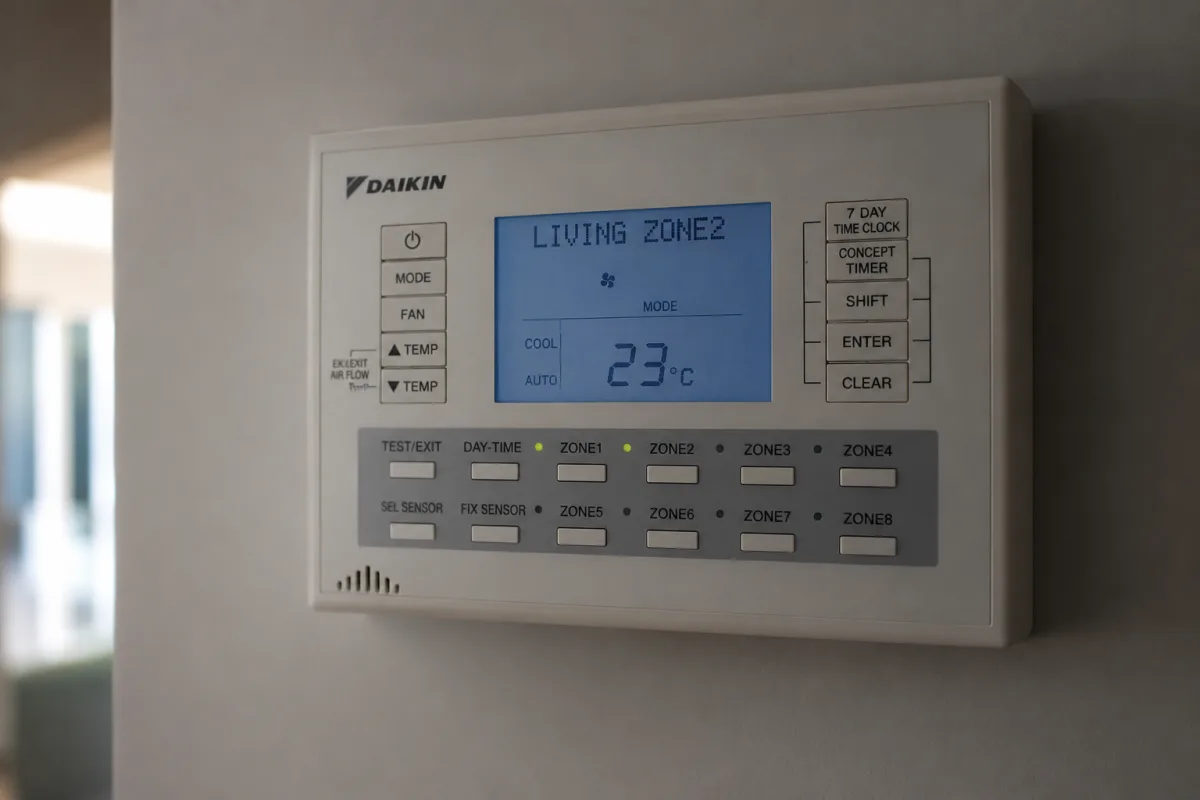
Zoning divides a ducted system into independently controlled areas, so you're not paying to condition rooms nobody's using at the time. Instead of one setting for the whole house, each zone can be turned on, off, or set to a different temperature.
Zoning is one of ducted air conditioning's biggest practical advantages over a single split unit, letting you heat or cool individual rooms even though the system is centrally installed. It's the feature that closes a lot of the running-cost gap between "one split system in one room" and "ducted covering the whole house", a well-zoned ducted system isn't running at full output for every square metre of the property every time it's switched on.
Can You Retrofit Ducted Into an Existing Home?
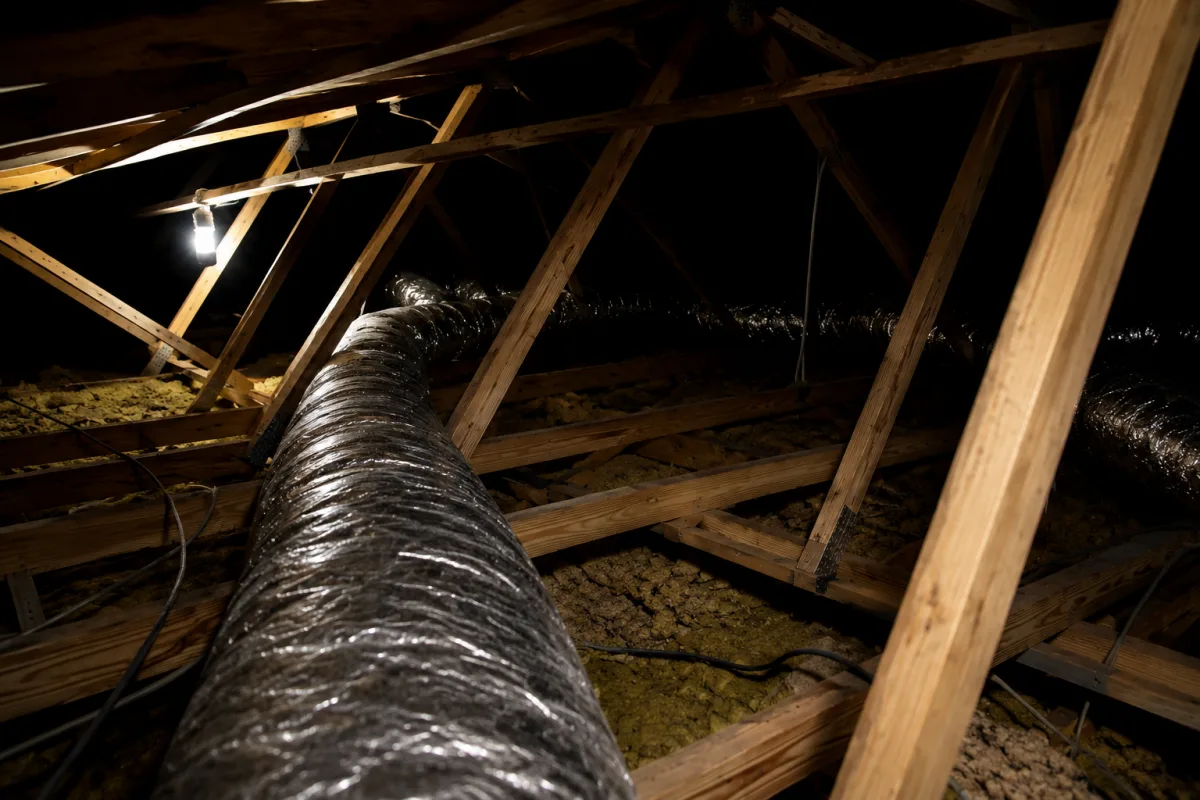
Usually, but it depends on the roof. Ducted systems need enough roof cavity space to fit the central unit and run ductwork to each room being conditioned, along with structural capacity to support the added weight. Homes with limited roof space, low-pitch rooflines, or complex existing layouts can face real constraints that a straightforward new build or a home with generous roof access simply doesn't have.
This is why ducted air conditioning is more commonly installed during a new build or a major renovation, when the roof space and duct runs can be planned from the start, rather than retrofitted into a finished home. It's not impossible in an existing house, it just needs an actual look at the roof cavity before anyone can say for certain what's achievable. If reverse cycle ducted is what you're after for an established home, that inspection is the first real step, not the price.
What Does Installation Actually Involve?
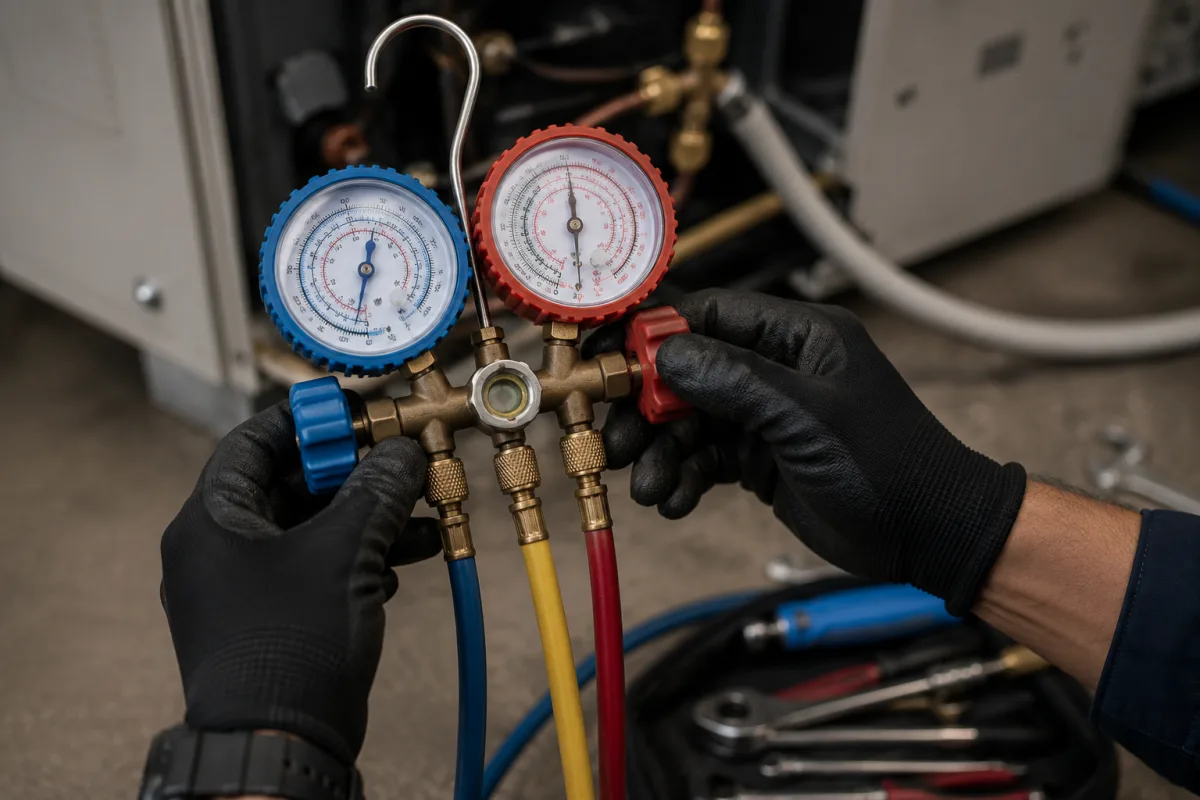
A split system installation covers system recommendation and sizing, mounting the indoor and outdoor units, standard refrigerant pipework, standard drainage, standard electrical connection to an available suitable supply, mounting hardware, commissioning and operational testing, a full heating and cooling test cycle, refrigerant-charge and drainage checks, customer handover, and site cleanup. A new or extended dedicated power supply run isn't automatically included if the existing electrical supply isn't suitable, that's a common assumption worth checking before you budget.
Ducted air conditioning installation covers system design and capacity selection, duct layout, supply-air outlets, zone configuration, installing the indoor and outdoor equipment, commissioning, zone-by-zone airflow balancing, and refrigerant handling and testing. The same electrical caveat applies, a dedicated power supply upgrade isn't automatically part of the job if the existing supply can't handle it.
The most common misconception, particularly for split systems, is underestimating everything beyond the unit itself: the planning, labour, pipework, electrical connection, mounting hardware, and materials that go into a proper installation. A cheap-looking quote sometimes reflects a shortcut in one of those areas rather than genuine savings.
What FHC Has Actually Installed
A recent split system job involved installing a 3kW unit in a co-op's product-sorting room, resolving a temperature-control problem that was affecting the space. On the ducted side, a recent job involved installing a 10kW zoned system with seven supply-air outlets, improving comfort and temperature control throughout the home it was fitted to.
Those two jobs sit at opposite ends of the split-versus-ducted decision for a reason, one room with a specific problem, and a whole home needing even coverage across seven separate outlets. Most real decisions land somewhere between those two examples.
Who Should Install It?
A licensed technician, for either system. This isn't a DIY job, and it isn't really a preference either. RACV points out that installing or replacing an air-conditioning system needs a suitably licensed person, both for safety and to avoid putting your household at risk.
Refrigerant handling specifically is regulated. Anyone installing equipment that handles refrigerant needs to hold a current Refrigerant Handling Licence issued by the Australian Refrigeration Council. That's the ARC licence you'll see on a quote, and it applies to installation exactly as much as it applies to servicing or repairs. Meet Clayton, FHC's founder and lead technician, and you'll find that licence alongside several others picked up over eight years working across both residential and commercial systems.